Royal Barge Procession: Witness Bangkok's 700-Year Living Tradition
Experience one of Thailand's most breathtaking traditions: the Royal Barge Procession. This rare ceremony features 52 golden barges, 2,000 synchronized oarsmen, and 700 years of history gliding down Bangkok's Chao Phraya River. Learn when to witness it, where to stand, and why this living heritage remains the ultimate bucket-list moment for cultural travelers.
The Royal Barge Procession: A Timeless Spectacle on Bangkok's Chao Phraya River
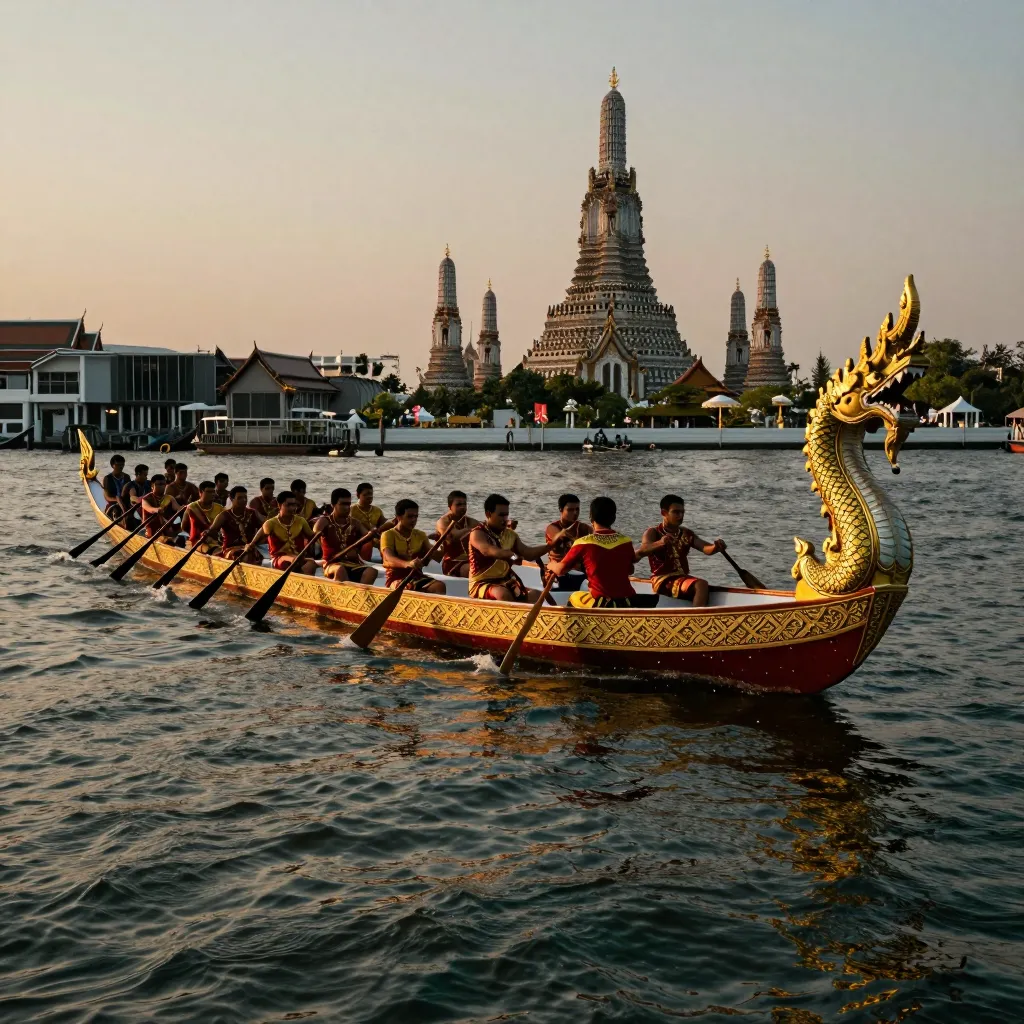
Imagine standing along the banks of the Chao Phraya River as the usual hum of ferry traffic falls silent. The water grows still. Then, cutting through the hush, comes the rhythmic chant of oarsmen—dozens of voices synchronized in ancient cadence. Elaborate golden barges glide past, their prows carved into mythical creatures, their crews dressed in traditional regalia that hasn't changed in centuries. This is the Royal Barge Procession, one of Thailand's most magnificent living traditions.
A Ceremony Steeped in History
The origins of this waterborne pageant stretch back to the 14th century, during the Ayutthaya period when Thailand's ancient capital flourished. Royal barges were essential not just for transport but as symbols of monarchical power and spiritual significance. The tradition faced its darkest hour in 1767 when invading Burmese forces sacked Ayutthaya, burning hundreds of royal vessels along with the city.
The ceremony was resurrected by General Taksin, who established a new capital at Thonburi and ordered the reconstruction of the barge fleet. When General Chakri ascended the throne as Rama I, founder of the still-reigning Chakri dynasty, he moved the capital across the river to Bangkok and formalized the Royal Kathin Ceremony—a Buddhist tradition where new robes are presented to monks using the royal barges.
After the 1932 revolution ended absolute monarchy, the procession fell dormant for decades. It wasn't until 1957 that the spectacle returned, with King Bhumibol Adulyadej (Rama IX) fully reviving the tradition in 1959. Since then, it has remained an infrequent but deeply meaningful event, performed only for the most significant royal and national occasions.
The Vessels: Floating Works of Art
At the heart of the procession sits the Suphannahong Royal Barge, the fleet's crowning glory. This magnificent vessel carries the King and requires fifty oarsmen to propel its 46-meter length. Its golden figurehead depicts a hong—a mythical swan-like creature from Thai folklore—with a crystal lotus dangling from its beak. Legend holds that when this crystal sways in the river breeze, prayers are carried heavenward.
The full procession comprises fifty-two elaborately decorated barges crewed by over 2,000 oarsmen, all selected from the Royal Thai Navy. Months of rigorous practice precede each event, ensuring the precise formation of five columns with royal vessels at center, flanked by escort barges. Signalmen at each prow direct the oarsmen with flag signals, while stern-rudder operators guide the massive vessels through the river's currents.
When not in use, these floating treasures reside at the National Museum of Royal Barges on Bangkok's Thonburi side. The museum opens daily to visitors, accessible via Tha Thonburi Railway Station (N11) or Tha Phra Pinklao (N12) piers—though the nearest MRT station, Bang Khun Non, requires a thirty-minute walk.
Modern-Day Occasions
Unlike Thailand's annual festivals, the Royal Barge Procession follows no calendar. It emerges only for moments of genuine national significance:
- 2003: APEC meeting in Thailand
- 2006: Diamond Jubilee of King Bhumibol Adulyadej
- 2007: 80th birthday of King Bhumibol Adulyadej
- 2012: Royal Kathin Ceremony honoring the King's 84th birthday
- 2019: Coronation of King Maha Vajiralongkorn (Rama X)
- 2024: 72nd birthday of King Maha Vajiralongkorn
The 2024 event, held on October 27, marked the King's 72nd birthday—an auspicious milestone in Thai culture, where birthdays falling on 12-year zodiac cycles (60, 72, 84) hold particular significance as they return to one's birth-year animal.
Witnessing the Spectacle
For travelers fortunate enough to visit during procession dates, several viewing strategies exist. The main event demands patience—afternoon start times around 3:30 PM, strict security protocols, crowded viewing areas, and potential bag searches. Photographers may find dress rehearsals more accommodating, with identical visual splendor but fewer restrictions.
The procession route typically begins at Tha Wasukri, the royal pier in Bangkok's Dusit district, proceeding toward either Wat Arun (Temple of the Dawn) or Ratchaworadit Pier near the Grand Palace. The journey takes approximately forty-five minutes, with barges moving in perfect formation against the backdrop of Bangkok's historic riverfront.
Official viewing areas have historically included:
- Rama VIII Bridge underpass (Thonburi side)
- Santichai Prakan Park
- Chaloem Phra Kiat Public Park
- Siriraj Hospital grounds
- Thammasat University
- Nagaraphirom Park
Practical considerations: Regular Chao Phraya ferry services suspend operations during the event. Several road bridges close temporarily, affecting traffic across the city. Arrive early—capacity fills rapidly, especially for main events attended by the King.
Dress respectfully: Cover shoulders and knees regardless of whether you're attending rehearsal or main event. Many Thai attendees wear yellow tops honoring the King (Monday, his birth day, associates with yellow in Thai tradition). The royal standard itself carries this golden hue.
The Rhythms That Endure
What makes the Royal Barge Procession extraordinary isn't merely its visual grandeur—though the golden prows and synchronized oarsmen provide that in abundance. It's the continuity: the same chants echoing across the Chao Phraya that rang out seven centuries ago, the same spiritual symbolism connecting earthly ceremony to heavenly blessing, the same meticulous craftsmanship maintaining vessels that are simultaneously functional boats and sacred objects.
In a city racing toward modernity, these few hours of ancient rhythm offer something increasingly rare: a genuine bridge across time, experienced not through museum glass but on the living water that has always been Bangkok's truest thoroughfare.