Mastering Group Excursions in Switzerland: A Planner's Essential Guide
This guide helps travel planners coordinate exceptional group experiences in Switzerland, covering factory visits, urban discovery, gastronomy, and historical sites. Learn practical logistics and scheduling tips to transform standard itineraries into memorable, cohesive journeys for your group.
Group Excursions in Switzerland: From Factory Floors to Alpine Feasts
Switzerland's compact geography and layered cultural identity make it an ideal playground for group travel. Whether you're coordinating a corporate retreat, a club outing, or a multi-generational family reunion, the country's infrastructure supports experiences that are simultaneously efficient and extraordinary. The following guide breaks down the most rewarding group excursion categories across the Swiss landscape, with practical angles for travelers who want substance alongside scenery.
Behind the Scenes: Factory and Technical Visits
Switzerland's reputation for precision isn't accidental. Group travelers can step inside the facilities that produce some of the world's most recognized exports—watchmaking ateliers in the Jura Arc, chocolate production lines near Vevey and Broc, and cheese-making operations in the Emmental and Gruyère regions.
These visits work particularly well for corporate groups because they translate abstract brand values into tangible processes. Watching a watchmaker assemble a mechanical movement, or observing the conching process that gives Swiss chocolate its signature texture, provides a shared reference point that generic team-building exercises rarely achieve. Most facilities require advance booking for groups larger than ten, and many offer English-language tours with tasting or hands-on components.
Practical note: Industrial tourism in Switzerland tends to cluster in specific corridors. Plan your route to hit multiple sites in a single day—Broc (Cailler chocolate) and Gruyères (la Maison du Gruyère) pair naturally, as do the watch museums in La Chaux-de-Fonds and Le Locle.
Urban Exploration: City and Village Tours
Swiss cities operate at a human scale that rewards walking. Group tours through Bern's UNESCO-listed Old Town, Lucerne's painted bridges, or the steep lanes of Lausanne's Cité district don't require athletic fitness—just comfortable shoes and curiosity.
For groups seeking something beyond standard historical commentary, consider themed walks: architectural tours focusing on the contrast between medieval cores and Mario Botta's modern interventions; literary walks tracing the footsteps of Hermann Hesse in Montagnola or the early Dadaists in Zurich; or food-focused strolls through Basel's Marktplatz and surrounding alleys where local producers set up stalls on specific days.
Village tours offer a different rhythm. Places like Appenzell, Murten, or Ascona maintain distinct regional characters that feel removed from international transit hubs. These work well for groups who want photography opportunities, slow lunches, and conversations with local artisans rather than packed itineraries.
The Swiss Table: Gastronomy Excursions
Swiss cuisine resists simple categorization. The country's four language regions—German, French, Italian, and Romansh—each contribute distinct culinary DNA, and the geography creates additional variation between Alpine dairy culture, lake fish traditions, and Mediterranean-influenced southern valleys.
Group gastronomy experiences range from structured to spontaneous:
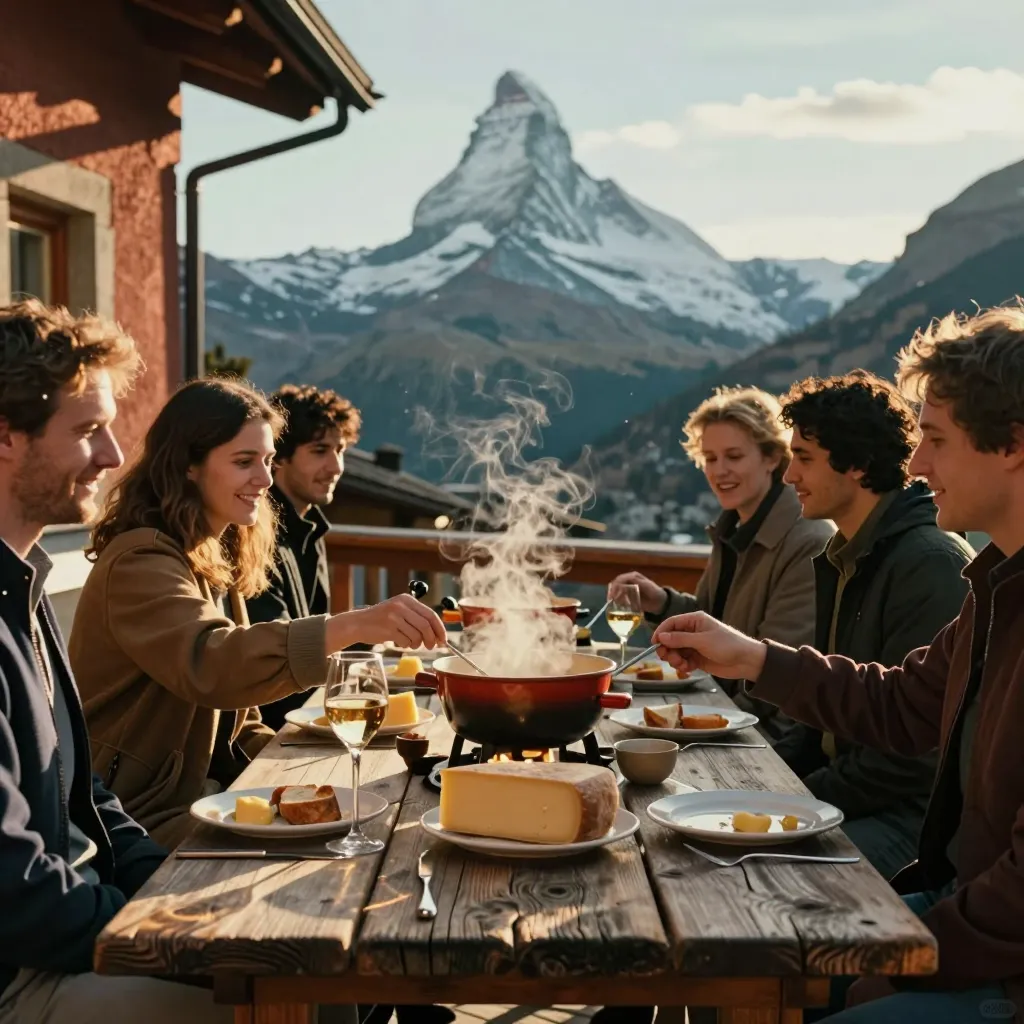
- Cheese route tastings in the Valais or Bernese Oberland, where raclette and fondue aren't menu items but cultural rituals with specific seasonal timing
- Vineyard walks along the Lavaux terraces above Lake Geneva or the Valais hillsides, where group tastings often include discussions of how glacial moraine and lake reflection shape the wine character
- Market visits in cities like Zurich's Helvetiaplatz on Tuesdays or Bern's Bundesplatz on specific days, where groups can assemble picnic components and eat along the Aare
The key insight for group planners: Swiss food culture is deeply regional. A fondue in Geneva uses different cheese blends than one in Zurich. Specifying the location within your planning creates more authentic experiences than generic "Swiss dinner" bookings.
All-Weather Alternatives
Mountain weather changes quickly, and group itineraries need contingencies. Switzerland's indoor offerings are substantial enough to constitute primary attractions rather than backup plans.
Museums in Switzerland punch above their weight relative to the country's size. The Swiss National Museum in Zurich, the Olympic Museum in Lausanne, and the Fondation Beyeler near Basel each warrant half-day visits. For groups with mixed interests, the Transport Museum in Lucerne manages to engage aviation, railway, and space enthusiasts simultaneously.
Underground spaces provide another angle. The St. Beatus Caves above Lake Thun, the Trummelbach Falls inside the mountain near Lauterbrunnen, and the various military fortifications open for tours (particularly in the Gotthard region) offer experiences that are literally weatherproof. Shopping arcades in cities like Zurich's Bahnhofstrasse or Geneva's Rue du Rhône provide covered walking routes with architectural interest beyond retail.
Historical Switzerland: Castles, Fortresses, and Sacred Spaces
Switzerland's political history is visible in its built environment. The three castles of Bellinzona—Castelgrande, Montebello, and Sasso Corbaro—represent a UNESCO ensemble that illustrates medieval defensive strategy and the power dynamics between Milan and the Swiss Confederation.
Other group-accessible historical sites include:
- Chillon Castle on Lake Geneva, which offers evening tours and private event spaces for larger groups
- The Abbey of St. Gall, where the Baroque library holds manuscripts dating to the 8th century
- The Augustinian monastery in Interlaken, which provides context for the region's tourism development from religious pilgrimage to Alpine recreation
These sites work best when guides connect the architecture to living traditions—how the Swiss Confederation's direct democracy emerged from medieval communes, or how religious reform movements in Zurich and Geneva reshaped European politics.
Beyond Categories: Flexible Group Activities
Some experiences resist the above classifications but suit group dynamics exceptionally well. Scenic rail routes like the Glacier Express or Bernina Line function as moving excursions, with panoramic cars that keep groups together while the landscape changes outside. Lake cruises on Lucerne, Thun, Brienz, or Geneva provide similar social architecture—shared tables, scheduled departures, and disembarkation options for hikers or cyclists.
For active groups, the Swiss hiking network is dense enough to support group walks at varying difficulty levels, with mountain restaurants (Berghotels) positioned at intervals that structure the day around meals rather than mileage.
Planning Considerations for Group Travel in Switzerland
Transit timing: The Swiss Travel System operates with precision that groups should respect. Missing a booked connection by five minutes can cascade through an entire day's schedule.
Language logistics: While English suffices in tourism infrastructure, rural experiences may involve German, French, or Italian. Confirming language availability for group bookings prevents awkward situations.
Seasonal awareness: Many Alpine excursions operate only from June through September. Conversely, Christmas market tours and winter fondue experiences in igloo villages require cold-weather timing.
Group size thresholds: Many Swiss experiences have sweet spots—cable cars often accommodate 20-40 people per car, restaurant group menus typically start at ten guests, and private tour pricing usually breaks favorably at twelve participants.
Switzerland's group excursion ecosystem rewards planners who think in terms of shared experiences rather than individual attractions. The country's strength lies in how its categories overlap—a factory visit might include a gastronomy component; a historical tour might end with a technical demonstration. Building itineraries that move between these categories keeps group energy high and creates the collective memories that justify organizing the trip in the first place.