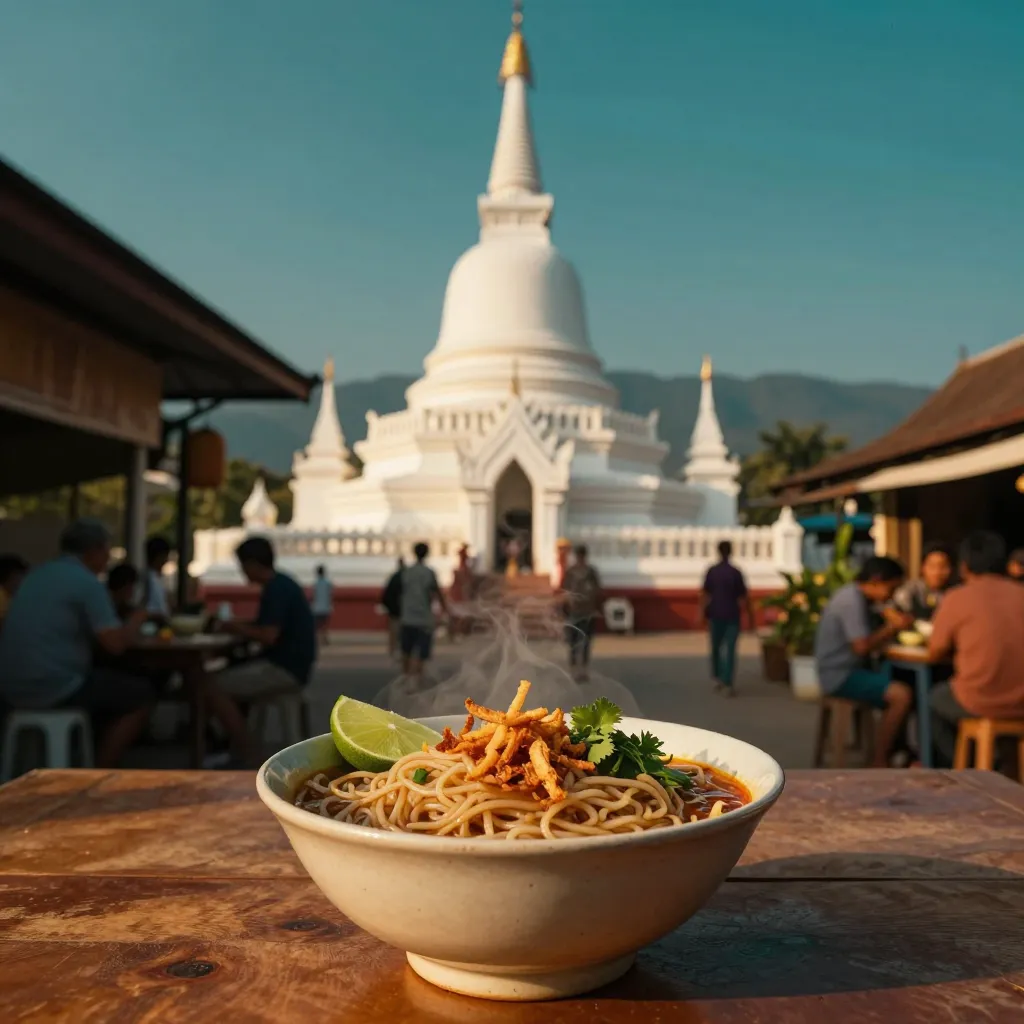
Chiang Mai: Northern Thailand's Cultural Heart
Chiang Mai blends ancient temples with lush mountains and vibrant street food. Ideal for spiritual retreats, culinary adventures, and outdoor exploration. Discover hidden gems beyond the city walls.
Chiang Mai: The Rose of Northern Thailand
Chiang Mai stands as the cultural heart of northern Thailand, offering a striking counterpoint to Bangkok's relentless energy. Here, mountain breezes temper tropical heat, ancient temples outnumber skyscrapers, and the rhythm of daily life invites deeper exploration rather than hurried sightseeing. Whether you're drawn by golden-spired wats, jungle-clad mountains, or the promise of exceptional street food, Thailand's second city delivers experiences that linger long after departure.
Where to Base Yourself
Within the Old City Walls
The historic core, enclosed by a rectangular moat and crumbling brick ramparts, remains the spiritual and practical center for most visitors. This walkable district houses over thirty temples, from the glittering Wat Phra Singh to the weathered brick chedi of Wat Chedi Luang. Guesthouses cluster thickly around Thapae Gate, particularly along Ratchadamnoen Road, while boutique properties occupy converted teak houses in quieter sois. Stay here for temple-hopping on foot and immediate access to the Sunday Walking Street.
Night Bazaar and Riverside
East of the old walls, the Ping River corridor pulses with commercial energy. This downtown zone centers on the famous Night Bazaar—less a single market than a sprawling district of stalls, shopping arcades, and live music venues. Accommodation skews toward mid-range and upscale properties, many with river-view pools. The trade-off: fewer budget options but superior dining and evening entertainment.
Nimmanhaemin
West of the center, this university-adjacent neighborhood channels a different Chiang Mai entirely. Tree-lined Nimmanhaemin Road and its tributary sois host third-wave coffee roasters, craft cocktail bars, and design-forward hotels. The crowd here runs younger and more style-conscious. Excellent for food enthusiasts and digital nomads, though you'll need transport to reach major temples.
Mae Rim and Mae Sa Valleys
For those prioritizing nature over nightlife, the rural valleys north of the city offer resort-style properties set among rice paddies and forested hills. These work best for travelers with rented vehicles, as public transport dwindles after dark.
Temples, Mountains, and Markets
Sacred Architecture
Chiang Mai's temple density is extraordinary. Beyond the old city walls, Doi Suthep mountain dominates the skyline—and demands a visit. The 309-step naga-guarded staircase (or funicular alternative) leads to Wat Phra That Doi Suthep, where golden chedis gleam against mountain backdrops and the city spreads below like a map. Closer to the summit, Bhuping Palace offers manicured gardens and temperate respite from lowland heat.
Back in the flatlands, Wat Chedi Luang's massive brick pagoda—partially collapsed by earthquake in 1545—retains a monumental presence that newer, more gilded structures cannot match. For living Buddhist practice rather than tourist spectacle, Wat Suan Dok's evening monk chats allow direct dialogue with resident scholars.
Natural Landscapes
Doi Inthanon National Park, two hours southwest, contains Thailand's highest peak at 2,565 meters. The summit trail passes through cloud forest where moss-draped trees shelter endemic bird species. Twin chedis near the peak honor the king and queen, their gardens blooming with cultivated temperate flowers impossible at lower elevations.
Closer in, Queen Sirikit Botanical Garden showcases northern Thailand's extraordinary plant diversity across hillside trails and glasshouse collections. For casual outdoor time, Huay Tung Tao Lake offers bamboo-platform restaurants where you eat above the water while mountains rise behind.
Markets and Crafts
Chiang Mai's handicraft heritage—silverwork, woodcarving, umbrella-making, silk weaving—finds commercial expression across multiple venues. The Night Bazaar delivers scale and variety but also tourist-targeted merchandise and persistent hawking. More rewarding is the Sunday Walking Street, when Ratchadamnoen Road closes to vehicles and fills with hundreds of stalls selling everything from hand-tooled leather to hill-tribe embroidery, interspersed with food vendors grilling sausage and pressing fresh sugarcane juice.
For unvarnished local commerce, Warorot Market (Kad Luang) operates daily near the river, its upper floors dedicated to dried goods and textiles while the ground level overflows with produce, flowers, and prepared foods.
What to Eat
Northern Thai cuisine diverges significantly from central Thai standards, emphasizing pork, fermented soybean, and milder chilies. The region's signature dish, khao soi, presents egg noodles in coconut-curry soup topped with crispy fried noodles—breakfast, lunch, or dinner, it never disappoints.
Street Food Hubs
Evening clusters at Chiang Mai Gate (south) and Chang Phueak Gate (north) offer concentrated, high-quality options. Look for sai oua (herb-laced pork sausage), nam prik ong (tomato-chili dip with vegetables), and khao kha moo (braised pork leg over rice). The Saturday and Sunday walking streets double as moving feasts, with stalls grilling moo ping (pork skewers), steaming dumplings, and frying roti.
Sit-Down Options
The Ping River supports long-established restaurants like The Riverside and Good View, where Thai and international menus accompany live music and water views. For focused, high-quality northern Thai cooking, seek out local institutions rather than riverfront giants—places where khao soi and gaeng hunglay (Burmese-influenced pork curry) have been perfected over decades.
When to Visit
Chiang Mai's elevation and mountain sheltering create distinct seasonal patterns unlike southern Thailand's more uniform tropical climate.
November–February: Cool Season
The optimal window. Days warm to 28–30°C while evenings cool to 15–19°C—pack a light jacket. November brings Loy Krathong and the concurrent Yi Peng Lantern Festival, when thousands of paper lanterns rise above the city and krathong floats drift down the Ping River. February's Flower Festival fills the streets with parade floats constructed entirely of blossoms.
March–June: Hot Season
Temperatures peak near 40°C in April, coinciding with Songkran (Thai New Year, April 13–15). The water festival transforms the city into a massive street party—exhilarating if you're prepared to get soaked, exhausting if you're not. March often brings agricultural burning haze that obscures mountain views and irritates respiratory systems.
July–October: Rainy Season
Afternoon downpours punctuate otherwise sunny days. The countryside greens dramatically, waterfalls flow powerfully, and accommodation prices drop. Waterproof jacket and flexible scheduling recommended.
Getting There and Around
Arrival
Chiang Mai International Airport connects directly to Bangkok (hourly flights), plus regional hubs like Singapore, Kuala Lumpur, and Hong Kong. Overland, the overnight sleeper train from Bangkok offers genuine travel romance—private cabins, dining car, and dawn arrival through misty northern hills. Buses run more frequently and cheaply but with less comfort.
Local Transport
The old city measures roughly 1.5 kilometers square—walkable, cyclable, or navigable by songthaew (red pickup trucks functioning as shared taxis). Flag one down, name your destination, negotiate a fare (typically 30–50 baht for short hops). Tuk-tuks cost more and offer less protection from sun and exhaust. Grab operates for metered pricing, though songthaews remain more atmospheric for short trips.
Beyond the City
Chiang Mai functions as gateway to northern Thailand's further reaches. Pai, three hours northwest via mountain road, draws backpackers with its canyon landscapes and hot springs. Chiang Rai, home to the White Temple (Wat Rong Khun), lies three hours northeast. Both merit multi-day exploration rather than rushed day trips.
Essential Practicalities
- Temple etiquette: Cover shoulders and knees; remove shoes before entering sanctuaries; never point feet toward Buddha images
- Altitude awareness: While the city sits only at 310 meters, mountain excursions reach elevations where temperatures drop significantly—layer accordingly
- Burning season: Late February through April, agricultural smoke can impact air quality; check real-time AQI if respiratory-sensitive
- Cash economy: Many temples, street vendors, and smaller restaurants operate cash-only; ATMs plentiful in tourist zones