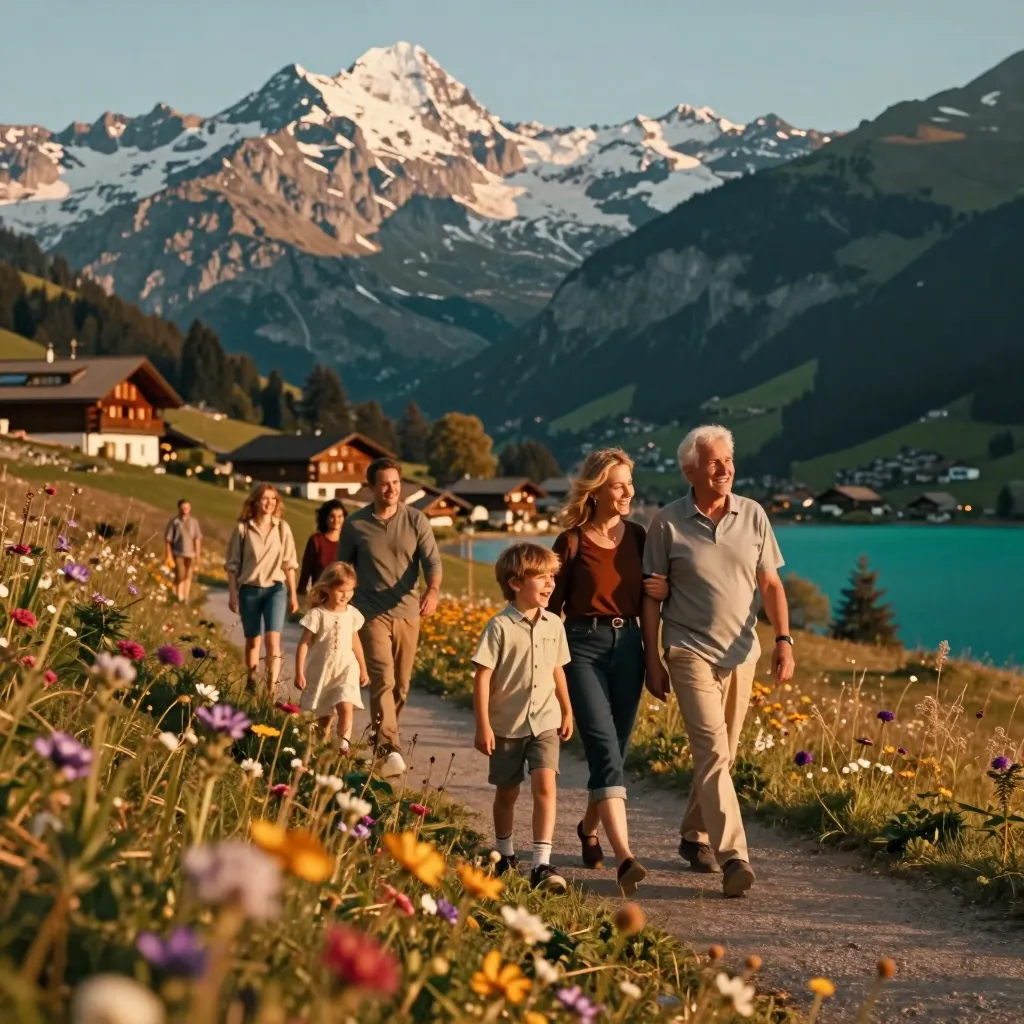
Family Adventures in Switzerland: Unforgettable Alpine Memories Together
Switzerland offers families an extraordinary mix of alpine adventures, thermal spas, wildlife encounters, and hands-on museums. From glacier hikes to chocolate factories, this compact country delivers unforgettable bonding experiences for all ages with world-class infrastructure and breathtaking scenery.
Family Adventures in Switzerland: Creating Unforgettable Memories Together
Switzerland offers an extraordinary playground for families seeking experiences that blend relaxation, education, and adventure. From serene alpine lakes to bustling urban centers, this compact country delivers remarkable diversity within short travel distances. Whether you're planning a summer hiking expedition or a winter wonderland escape, Switzerland's family-friendly infrastructure and natural beauty create the perfect backdrop for multigenerational bonding.
Finding Your Pace: Relaxation and Reconnection
After months of school runs, work deadlines, and digital overload, families need spaces designed for genuine unwinding. Switzerland excels at creating environments where parents can actually decompress while children remain engaged.
Thermal Wellness for All Ages
Swiss thermal baths have evolved far beyond adult-only spa concepts. Facilities like the Tamina Therme in Bad Ragaz feature dedicated family zones with graduated pool temperatures, water playgrounds, and supervised children's areas. The Alpentherme Leukerbad combines stunning mountain views with shallow splash zones where toddlers can safely explore while parents soak in mineral-rich waters.
Lakeside Serenity
The country's numerous lakes provide natural relaxation without the intensity of ocean currents. Lake Thun and Lake Brienz offer gentle swimming areas with maintained beaches, paddleboat rentals, and lakeside promenades perfect for stroller walks. The Lido di Lugano combines Mediterranean atmosphere with Swiss organization—think clean facilities, lifeguard supervision, and adjacent gelato stands.
Mountain Retreats
Family-oriented mountain hotels increasingly offer "soft adventure" packages: guided nature walks suitable for young legs, evening storytelling sessions, and childcare that emphasizes outdoor play rather than screen time. The Engadine Valley particularly shines here, with flat valley-floor trails connecting charming villages and plenty of benches for tired little hikers.
Nature's Classroom: Exploring the Great Outdoors
Swiss landscapes serve as the ultimate interactive learning environment, where geology, biology, and meteorology become tangible experiences rather than textbook concepts.
Accessible Alpine Experiences
The myth that children dislike hiking dissolves quickly on Switzerland's thematic trails. The Moorland Trail in the Jura region features wooden sculptures and interactive stations explaining bog ecology. The Flower Trail above Mürren blooms with labeled alpine flora during summer months, turning each walk into a botanical scavenger hunt.
Subterranean Wonders
Cave systems like St. Beatus Caves near Interlaken transform geology into adventure storytelling. Dramatic lighting highlights stalactite formations while well-maintained walkways accommodate strollers and unsure feet. The constant 8-10°C temperature provides natural air conditioning during hot summer days.
Wildlife Encounters
The Swiss National Park in Graubünden offers strictly regulated but rewarding wildlife observation. Marmots whistle from rocky outcrops, ibex traverse steep slopes, and golden eagles circle overhead. The park's family trails include "quiet zones" where children learn observation patience—a skill that translates far beyond vacation.
Waterfall Chasing
Switzerland's glacial waterfalls provide dramatic natural spectacles accessible to families. The Rhine Falls near Schaffhausen feature viewing platforms that bring the thundering water remarkably close, while boat trips to the central rock allow brave visitors to stand amidst the spray.
Learning Through Experience: Educational Encounters
Switzerland transforms education into entertainment through hands-on museums and cultural sites that respect children's intelligence while maintaining engagement.
Interactive Science
The Swiss Museum of Transport in Lucerne ranks among Europe's most engaging technical museums. Flight simulators, planetarium shows, and a massive model railway captivate across age groups. The museum's design acknowledges that children learn through touch and experimentation rather than passive observation.
Chocolate and Cheese: Culinary Education
The Maison Cailler chocolate factory near Gruyères demystifies confectionery production while offering generous tastings. Similarly, alpine cheese-making demonstrations at Show Dairies like the one in Engelberg connect agricultural processes to the fondue enjoyed at dinner. These experiences ground food in place and process, creating mindful young eaters.
Historical Immersion
Medieval castles such as Chillon on Lake Geneva offer family audio guides that transform historical facts into narrative adventure. Children receive separate storylines that parallel adult content, ensuring engagement without oversimplification. The castle's dungeons, ramparts, and great halls provide physical spaces for imaginative historical play.
Urban Discovery
Swiss cities integrate learning into street-level exploration. Bern's Einstein Museum (housed in the physicist's former apartment) makes relativity theory accessible through thought experiments and interactive displays. Zurich's Swiss National Museum features dedicated children's floors where archaeological discovery becomes hands-on.
Urban Adventures: City Breaks with Kids
Swiss cities defy the assumption that urban environments bore children. Compact centers, abundant green spaces, and thoughtful public design make city exploration genuinely family-friendly.
Zurich: Lakeside Metropolis
The country's largest city balances urban energy with natural access. The Zoo Zurich ranks among Europe's finest, with the Masoala Rainforest hall replicating a Madagascar ecosystem complete with tropical humidity and free-flying birds. The Kunsthaus museum offers family Sundays with guided activities, while the Uetliberg mountain provides forest hiking minutes from the central station.
Geneva: International Crossroads
Geneva's Jet d'Eau fountain becomes a game of wind-direction prediction as spray drifts across the lakefront promenade. The Natural History Museum houses an impressive collection including a two-headed tortoise, while Parc La Grange offers rose gardens and playgrounds with Mont Blanc views.
Bern: Medieval Playground
The UNESCO-listed old town features the Zytglogge astronomical clock where mechanical figures perform hourly shows, drawing crowds of enchanted children. The Bear Park (BärenPark) provides ethical animal observation along the Aare River, while the Gurten mountain park above the city offers toboggan runs and panoramic dining.
Lucerne: Compact Charm
This lakefront city's walkable scale suits family pacing. The Lion Monument sparks historical conversation, while the Transportation Museum (mentioned earlier) anchors a full day. Lake steamers depart regularly for Weggis or Vitznau, making the journey as enjoyable as the destination.
Active Pursuits: Burning Energy Beautifully
When weather confines families indoors or relaxation transitions to activity, Switzerland provides outlets for physical energy that feel rewarding rather than obligatory.
Cycling Infrastructure
Switzerland's cycling network includes family-specific routes like the Aare River Route between Thun and Bern—flat, car-free, and punctuated by swimming spots. E-bike rentals level the playing field for varying fitness levels within family groups. Mountain bike parks in Lenzerheide and Davos feature graduated difficulty trails with skill-building zones.
Winter Sports Beyond Skiing
While Swiss ski schools excel at introducing children to snow sports, winter activity extends beyond downhill. Winter hiking trails (cleared and often illuminated) allow non-skiers to participate in alpine magic. Toboggan runs like the 3.5km track from Preda to Bergün provide adrenaline without technical skill requirements. Ice skating rinks appear in most towns during winter months, often with equipment rental and hot chocolate proximity.
Indoor Climbing and Adventure
Modern rope parks (Seilpark) like those in Interlaken and Grindelwald feature courses graded by height and difficulty, allowing family members to challenge themselves appropriately. Indoor climbing gyms in major cities provide rainy-day alternatives with auto-belay systems for independent children.
Adventure Awaits: Pushing Boundaries Safely
Switzerland's adventure infrastructure specializes in making exhilarating experiences accessible to younger participants without compromising safety standards.
Treetop Exploration
High ropes courses have proliferated across Swiss forests, with Seilpark Interlaken and Rope Park Gantrisch offering courses beginning at ages 4-5. Continuous belay systems prevent accidental disconnection, while trained staff provide instruction in multiple languages.
Glacier Experiences
The Jungfraujoch railway—though tourist-heavy—delivers genuine high-alpine experience with minimal physical exertion. The Glacier Gorge (Gletscherschlucht) near Grindelwald features walkways bolted into canyon walls, bringing families face-to-face with glacial carving power. For more committed families, guided glacier hikes with crampon instruction provide unforgettable perspective on climate and geology.
Paragliding Tandems
Several Swiss resorts offer tandem paragliding experiences where children can fly secured with professional pilots. Interlaken and Verbier particularly specialize in family-friendly aerial experiences, with weight minimums typically around 20-30kg depending on wind conditions.
Unconventional Playgrounds
Swiss playground design often incorporates natural materials and calculated risk. The Spielplatz am See in Zurich features water play and climbing structures integrated into lakeside landscape. Adventure playgrounds in Basel and Bern include fire-building areas and tool use under supervision—activities increasingly rare in liability-conscious cultures but developmentally valuable.
Planning Considerations for Family Travel
Accommodation Strategy
Swiss family hotels increasingly recognize that "family-friendly" means more than providing cribs. Properties designated as Family Hotels and Lodgings maintain standards including professional childcare, playroom facilities, and parent-friendly amenities like spa access and adult dining options. Self-catering apartments in Interhome or Swiss Tourism networks provide kitchen facilities for managing picky eaters and breakfast routines.
Transportation Efficiency
The Swiss Travel System family offerings merit attention: children under 16 travel free when accompanied by a parent holding a valid pass. This dramatically changes cost calculations for family itineraries. The Swiss Family Card (available with most pass purchases) formalizes this benefit. Train travel itself becomes part of the experience—the Glacier Express and Bernina Express routes captivate children with panoramic windows and dramatic engineering.
Seasonal Timing
Summer (July-August) delivers reliable hiking weather but peak crowds and prices. Late June and early September often provide optimal compromise. Winter sports demand advance booking for instruction and equipment. Spring (April-May) and autumn (October-November) offer lower prices and empty trails, though mountain weather becomes less predictable and some high-alpine facilities close.
Packing Philosophy
Swiss weather changes rapidly, particularly at elevation. Layering systems work better than heavy single garments. Rain protection remains essential even during summer months. Comfortable walking shoes matter more than fashion—cobblestone old towns and mountain trails punish inappropriate footwear.
Beyond the Obvious: Deeper Family Connections
The most meaningful Swiss family experiences often emerge from slower travel choices. A multi-day stay in one valley allows children to build familiarity with trails, shopkeepers, and restaurant menus. Learning basic German, French, or Italian greetings opens interactions and models language learning as ongoing process rather than school subject.
Consider building itineraries around a theme—water (lakes, rivers, waterfalls, fountains), heights (mountains, towers, cable cars, lookouts), or time (medieval castles, Roman ruins, modern architecture). Thematic coherence helps children process diverse experiences into coherent narrative.
Switzerland's greatest family travel gift may be its scale. No destination lies impossibly far from another, allowing families to sample alpine meadows, urban culture, and lakeside relaxation within a single week without exhausting transit days. This accessibility lets families follow energy levels and weather patterns rather than rigid schedules—the foundation of genuinely restorative travel.
The memories created here tend to persist: the first glimpse of the Matterhorn emerging from cloud, the taste of raclette melted over open flame, the sensation of glacial meltwater on tired hiking feet. Switzerland doesn't merely accommodate families—it actively welcomes them into landscapes and experiences that shape perspective long after the return flight home.