A Culinary Guide to Japan: From Kaiseki Fine Dining to Street Food Delights
Discover Japan's world-renowned culinary landscape through this comprehensive guide. Learn about essential dining styles including kaiseki, izakaya, and ramen shops. Explore regional specialties from Hokkaido's fresh seafood to Osaka's street food culture. Master Japanese dining etiquette and plan your ultimate food journey across the country.
A Culinary Guide to Japan: Navigating the Country’s Diverse Food Scene
Japan offers one of the world's most sophisticated and varied culinary landscapes. For travelers, the experience ranges from high-end, precision-driven dining to the comforting, quick-service meals found in bustling urban stations. Understanding the different styles of eating and the regional specialties is essential for anyone looking to experience Japan through its flavors.
The Core Dining Styles
To navigate the Japanese food scene, it is helpful to distinguish between the different environments in which meals are served.
Kaiseki: The Art of Seasonal Dining
Kaiseki is a traditional multi-course dinner that serves as the pinnacle of Japanese haute cuisine. It is deeply rooted in the principles of seasonality, presentation, and balance. Each dish is meticulously prepared to reflect the current time of year, using ingredients at their absolute peak. Kaiseki is often experienced in ryokan (traditional inns) and focuses on the natural flavors of the food rather than heavy seasoning.
Izakaya: The Japanese Pub Experience
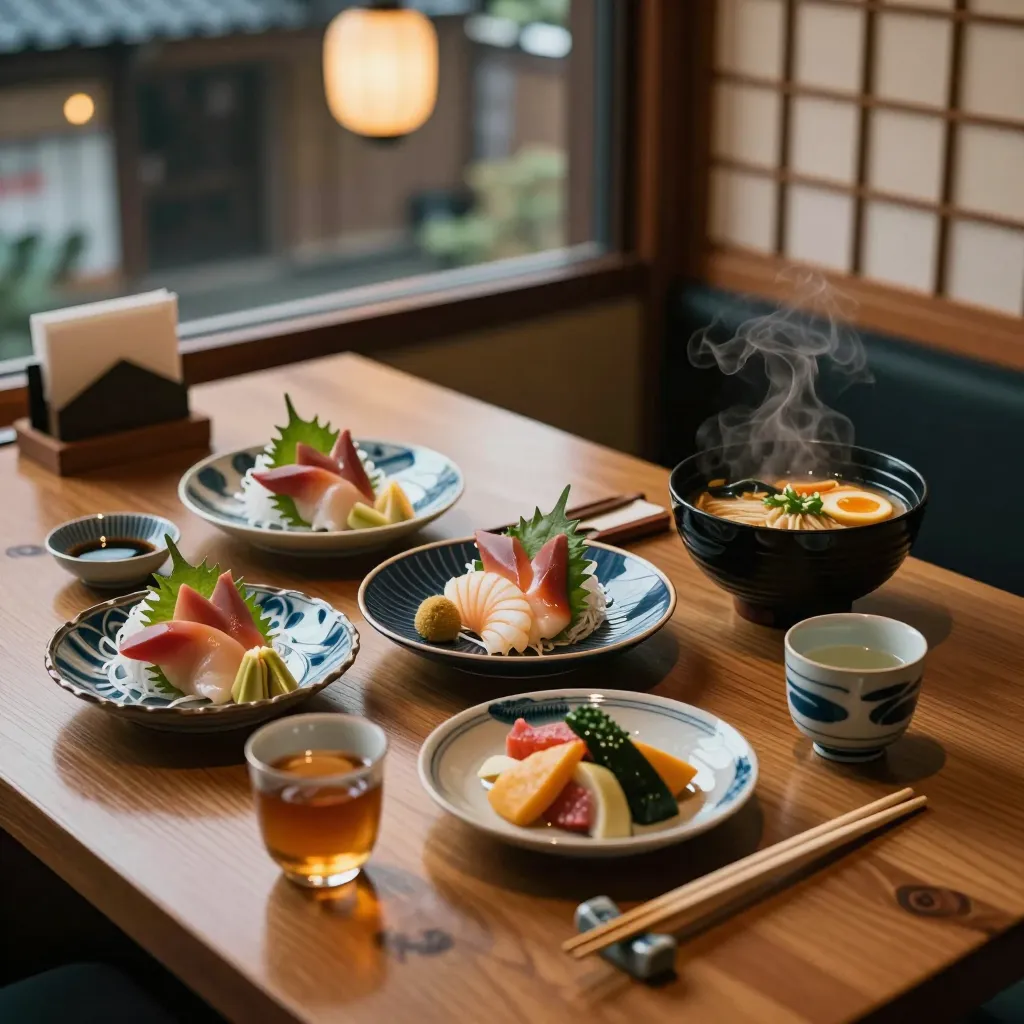
For a more social and casual atmosphere, the izakaya is the go-to destination. Similar to a tapas bar, an izakaya serves a wide variety of small plates—such as yakitori (skewered chicken), sashimi, and karaage (fried chicken)—designed to be shared alongside various drinks. This is where the local social life happens, offering a lively and unpretentious way to sample many different dishes in one sitting.
Ramen Shops: Quick and Soulful
Ramen is more than just a quick meal; it is a culinary craft. Specialized ramen shops often focus on a single type of broth, such as tonkotsu (pork bone), shoyu (soy sauce), shio (salt), or miso. Each region in Japan has its own signature style, and visiting local shops provides a window into the specific tastes of different prefectures.
Essential Dishes to Try
While Japan’s menu is vast, several foundational dishes define the national palate.
- Sushi and Sashimi: Whether enjoyed at a high-end Ginza establishment or a revolving kaiten-zushi restaurant, the quality of fresh seafood is a cornerstone of Japanese dining.
- Tempura: Lightly battered and deep-fried vegetables and seafood, tempura relies on precise temperature control to ensure the coating remains crisp and airy rather than greasy.
- Okonomiyaki: Often described as a savory pancake, this dish varies by region. The Osaka style tends to be mixed together, while the Hiroshima style is layered with ingredients like noodles and cabbage.
- Unagi: Grilled freshwater eel, typically glazed with a sweet soy-based sauce, is a delicacy often enjoyed during the summer months.
Regional Specialties and Local Flavors
Japan's geography creates distinct culinary boundaries. A traveler moving from north to south will notice significant shifts in ingredients and techniques.
Hokkaido: The Seafood and Dairy Capital
Located in the far north, Hokkaido is famous for its incredibly fresh seafood, particularly crab, sea urchin (uni), and scallops. The cold waters contribute to the richness of the ingredients, and the region is also renowned for its high-quality dairy products.
Kansai: The Heart of Tradition
The Osaka and Kyoto regions offer a different perspective. Kyoto is the center for refined, traditional cooking and vegetarian Buddhist cuisine (shojin ryori). Osaka, conversely, is known as "Japan's Kitchen," famous for its vibrant street food culture, particularly takoyaki (octopus balls).
Kyushu: Bold and Spicy
The southern island of Kyushu introduces more robust and sometimes spicier flavors. Fukuoka, a major city on the island, is world-famous for its Hakata ramen, characterized by a creamy, rich pork broth.
Etiquette and Tips for Travelers
Navigating Japanese dining etiquette can enhance your experience and show respect to the hosts.
- Oshibori: Upon sitting, you will often be provided with a wet towel (oshibori). This is intended for cleaning your hands before the meal begins.
- Chopstick Manners: Avoid sticking your chopsticks vertically into a bowl of rice, as this is a ritual associated with funerals. Additionally, do not pass food directly from your chopsticks to someone else's.
- Paying the Bill: In many traditional restaurants, you do not pay at the table. Instead, take your bill to the register near the exit.
- Cash vs. Card: While major cities and high-end establishments increasingly accept credit cards, many smaller, local eateries and street food stalls remain cash-only. Always carry yen for these authentic experiences.