Kanazawa Travel Guide: Japan's Hidden Cultural Gem
Kanazawa, a coastal gem on Japan's Sea of Japan, boasts Kenroku-en Garden, Higashi Chaya geisha quarter, and Nagamachi samurai lanes intact from centuries past. Indulge in Hokuriku seafood at Omicho Market and kaiseki feasts, all in a walkable city reached by Shinkansen in 2.5 hours from Tokyo. Perfect for travelers craving authentic culture without Tokyo or Kyoto crowds.
Kanazawa Travel Guide: Japan's Hidden Cultural Gem
Kanazawa sits on the Sea of Japan coast like a well-kept secret. While Tokyo and Kyoto dominate most itineraries, this compact city rewards travelers with one of the country's finest traditional gardens, neighborhoods that survived centuries intact, and a food culture shaped by mountain and sea. The Hokuriku Shinkansen now connects Tokyo directly in under two and a half hours, making Kanazawa a natural extension of any Japan trip rather than a detour.
Why Visit Kanazawa
Unlike many Japanese cities rebuilt after war or modernization, Kanazawa retains large swaths of its historic character. The Maeda clan ruled here for nearly three centuries, pouring wealth into arts and crafts rather than military ambition. The result is a city where geisha districts, samurai residences, and contemporary museums coexist within a walkable core.
The city also sits at a culinary crossroads. Cold winters and rich coastal waters produce distinct regional specialties you won't find in Tokyo or Osaka. Combine this with a crafts tradition spanning gold leaf, lacquerware, and pottery, and Kanazawa offers depth that belies its modest size.
Top Things to Do
Kenroku-en Garden
This 11.4-hectare landscape ranks among Japan's three most celebrated gardens, and for good reason. The Maeda lords began developing it in the 1670s, and it opened to the public in 1871. The name translates to "Garden of the Six Sublimities" — spaciousness, seclusion, artifice, antiquity, water features, and panoramic views.
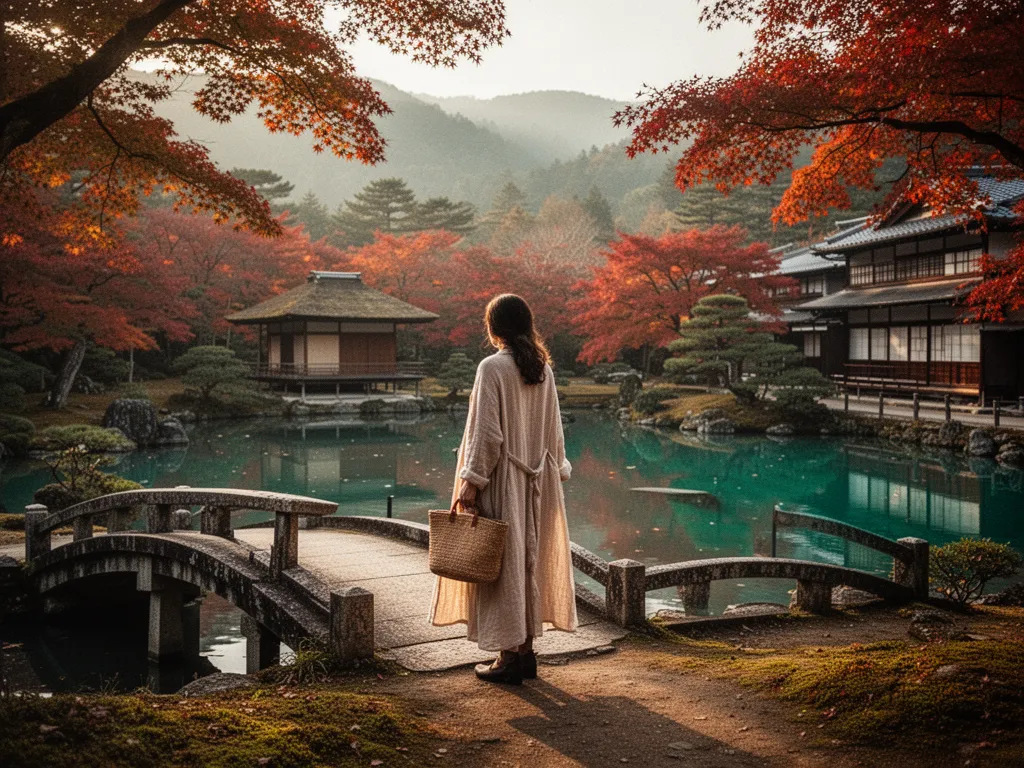
Visit early morning to see the iconic Kotoji-toro lantern reflected in Kasumiga-ike pond without crowds. In late autumn, the garden's maples ignite in color. Winter brings yukitsuri, the rope-and-bamboo supports that protect pine branches from heavy snow — a sculptural sight unique to the season.
Higashi Chaya District
This preserved geisha quarter along the Asano River features wooden teahouses with lattice-fronted facades dating to the 1820s. Several buildings now operate as cafes and shops where you can watch gold leaf application — Kanazawa produces nearly all of Japan's gold leaf.
Visit Kaikaro Teahouse, an active establishment that opens portions to visitors during the day. In the evening, the district's paper lanterns and stone-paved streets transport you to the Edo period.
Nagamachi Samurai District
Walk the narrow lanes between earthen walls that once housed middle- and upper-ranking samurai. The Nomura-ke Residence exemplifies the district's appeal: a restored samurai home with a stunning private garden, family artifacts, and a small museum of household items. The garden's maple and artificial hill arrangement demonstrates how even warrior households cultivated refined taste.
21st Century Museum of Contemporary Art
This circular, glass-walled museum breaks deliberately from Kanazawa's traditional architecture. Leandro Erlich's Swimming Pool — an optical illusion installation visible from above and below the waterline — draws consistent crowds, but the rotating exhibitions and permanent collection of Japanese and international contemporary art reward deeper exploration. Admission to the permanent collection is free.
Omicho Market
Operating since the Edo period, this covered market houses over 170 stalls selling seafood, produce, and prepared foods. The Sea of Japan yields exceptional crab, shrimp, and yellowtail, much of it sold for same-day consumption at market restaurants. Arrive before 11 AM when the day's catch is freshest, and don't skip the kaisendon (seafood rice bowls) at stalls along the market's edges.
Where to Eat
Kaiseki and Traditional Cuisine
Kanazawa's kaiseki tradition emphasizes local ingredients and subtle presentation. Tsuruko serves refined multi-course meals in a traditional setting near Kenroku-en, with seasonal menus that might feature jibuni (duck and wheat gluten stew) or kabura-zushi (turnip and fish pressed sushi), both Kanazawa specialties.
For a more accessible introduction, Iki-iki Tei near Omicho Market offers set lunches that apply kaiseki principles to simpler preparations.
Sushi and Seafood
The proximity to Toyama Bay's nutrient-rich waters makes Kanazawa a serious sushi destination. Sushi Ippei, a small counter near the station, serves Edomae-style sushi with Hokuriku fish. For something distinctly regional, seek out nodoguro (blackthroat seaperch), a rich, fatty white fish rarely found outside this coastal zone.
Casual Dining
Hanton Rice, a Kanazawa invention, covers rice with a thin omelet and demi-glace sauce — a satisfying, inexpensive option available at lunch spots throughout the city. Gold Leaf Ice Cream, sold at shops in Higashi Chaya and near Kenroku-en, tops soft-serve with edible gold leaf. It's touristy but harmless, and the gold itself is tasteless.
Izakaya and Nightlife
The Katamachi district, south of the castle, concentrates the city's best izakaya and small bars. Yakitori Marukin grills skewers over charcoal with minimal seasoning, letting the quality of local chicken speak for itself. For something more experimental, several younger chefs in the district apply French technique to Hokuriku ingredients in small-plate formats.
When to Go
Spring (March–May)
Cherry blossoms typically peak in early April, about a week later than Tokyo. Kenroku-en, the castle park, and the Asano River banks provide excellent hanami settings without Kyoto's crushing crowds. Temperatures range from 8°C to 20°C; bring layers for cool evenings.
Summer (June–August)
Humid and warm, with temperatures reaching 30°C. The rainy season lasts through mid-July. While not peak season, summer offers lush garden greenery and fewer tourists. The Hyakumangoku Festival in early June features samurai processions and traditional dance performances.
Autumn (September–November)
Perhaps the ideal season. Crisp air, clear skies, and spectacular foliage from late October through November. Kenroku-en's maples peak in mid-November. Daytime temperatures hover between 12°C and 22°C.
Winter (December–February)
Cold, with temperatures near freezing and heavy snow common in January and February. Yet this is when Kanazawa shows another face: snow-laden pines in Kenroku-en, steaming bowls of oden and ramen, and the chance to experience a ryokan at its atmospheric peak. Pack serious winter footwear.
Getting There and Around
From Tokyo
The Hokuriku Shinkansen runs from Tokyo Station to Kanazawa in approximately 2 hours 20 minutes on the fastest Kagayaki services. The Japan Rail Pass covers this route, though pass holders cannot reserve Kagayaki seats and must take slightly slower Hakutaka trains.
From Kyoto and Osaka
Limited express trains run directly from Kyoto (2 hours 10 minutes) and Shin-Osaka (2 hours 30 minutes). The Thunderbird service offers frequent departures.
Within Kanazawa
The city center is compact enough for walking. The Kenroku-en Shuttle Bus and Kanazawa Loop Bus connect major sights for a flat fare. A one-day bus pass (¥800) pays for itself with three rides. Taxis are reasonably priced for short hops. Rental bicycles are available near the station, though winter snow makes this impractical for several months.
Where to Stay
Ryokan
Kanazawa offers excellent ryokan options at prices below Kyoto's. Ryokan Asadaya in the Nishi Chaya district provides tatami rooms, kaiseki dinners, and communal baths in a converted merchant house. Yamanoo offers a more intimate experience with just six rooms and an exceptional breakfast.
Hotels
The Share Hotels Hatchi occupies a converted commercial building near the station with design-forward rooms and a communal lounge. ANA Crowne Plaza Kanazawa sits directly above the station for maximum convenience, with solid mid-range amenities. For luxury, The Hyatt Centric Kanazawa opened near the station in 2020 with contemporary Japanese design and a location that simplifies arrival and departure logistics.
Suggested Itineraries
One Day
Morning: Kenroku-en Garden followed by Kanazawa Castle Park Lunch: Omicho Market seafood bowl Afternoon: Higashi Chaya District for gold leaf crafts and tea Evening: Katamachi izakaya crawl
Two Days
Day One: As above, plus the 21st Century Museum of Contemporary Art in the afternoon.
Day Two: Morning at Nagamachi Samurai District and the Nomura-ke Residence. Afternoon at the D.T. Suzuki Museum — a minimalist contemplation space dedicated to the Zen philosopher — followed by the Teramachi temple district. Dinner at a kaiseki restaurant.
Tokyo–Kyoto–Kanazawa Route
This triangular itinerary works efficiently with the shinkansen network. Position Kanazawa after Kyoto (2 hours 10 minutes direct) and return to Tokyo from Kanazawa (2 hours 20 minutes). The route moves from urban intensity to traditional refinement to coastal culture without backtracking.
Practical Tips
- Cash remains essential at smaller restaurants, market stalls, and some craft shops. Withdraw at 7-Eleven ATMs if needed.
- Reserve ryokan dinners when booking your room; kaiseki preparation requires advance notice.
- Gold leaf souvenirs range from cosmetic products to small artworks. The Hakuichi shop in Higashi Chaya offers quality-controlled items with transparent pricing.
- Language barriers exist outside major hotels and tourist restaurants, but the compact city center makes independent navigation straightforward. Download offline maps before arrival.
- Winter visitors should confirm hotel heating systems; some older ryokan rely on space heaters rather than central heating.
Kanazawa doesn't shout for attention. It rewards the traveler who slows down, who walks the back lanes, who sits long enough in a garden to notice how the light changes across a pond. In a country of superlatives, it offers something rarer: balance.