Bangkok Travel Guide: Navigating Thailand's Energetic Capital Like a Local
Bangkok divides travelers—some find magic in its chaos, others exhaustion. This guide transforms overwhelm into rhythm, covering essential neighborhoods from Rattanakosin's temples to Chinatown's midnight feasts. Learn when to visit, where to stay, how to navigate, and why preparation turns Thailand's capital from intimidating to irresistible.
Bangkok Travel Guide: Navigating Thailand's Energetic Capital
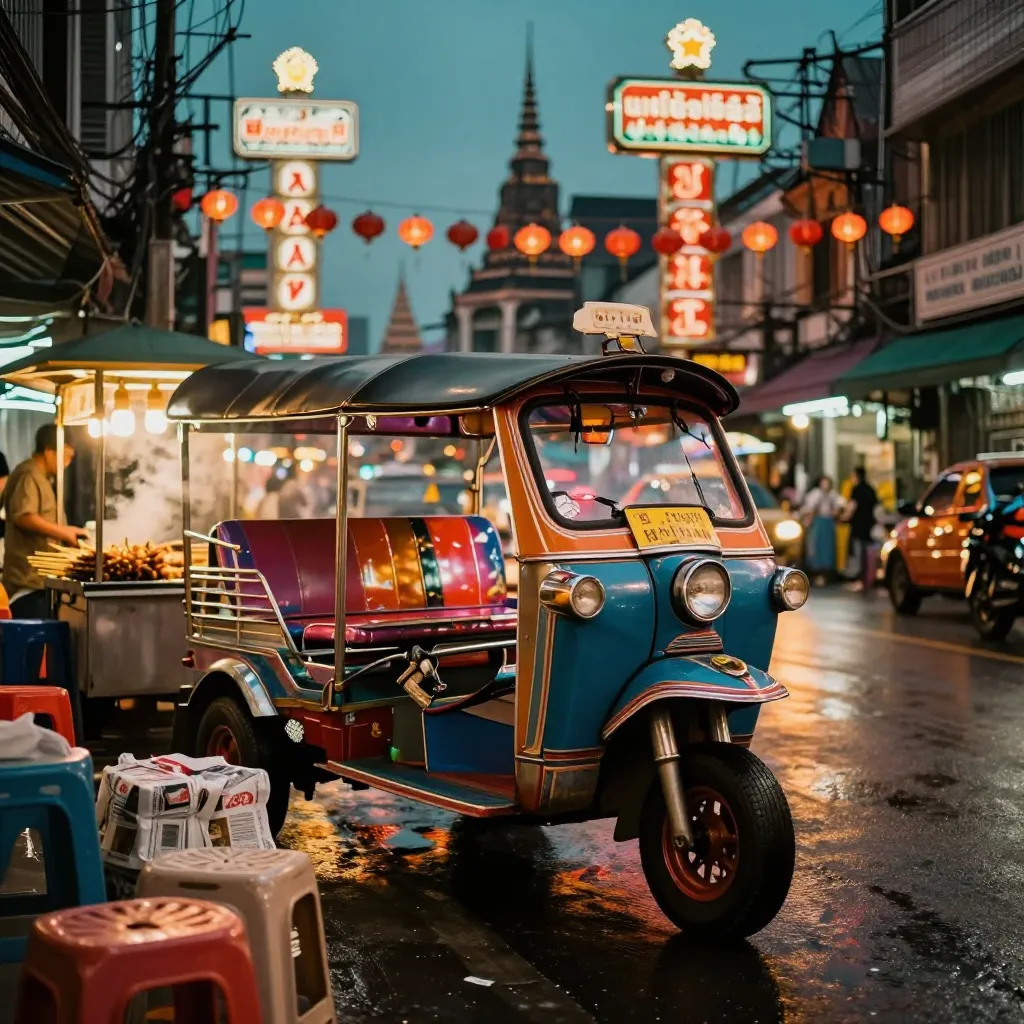
Bangkok divides travelers like few other cities. Some arrive and immediately feel the pulse—street vendors calling out, tuk-tuks weaving through traffic, incense drifting from temple doorways. Others find the sensory overload exhausting. The difference usually comes down to preparation. Understanding how this city functions transforms chaos into rhythm.
Locals call their home Krung Thep, the City of Angels. With over 10 million residents and a metropolitan area stretching far beyond official boundaries, it demands respect and patience. Give it both, and Bangkok rewards you with experiences found nowhere else.
Where to Stay: Matching Neighborhoods to Travel Styles
Rattanakosin (Old City) places you within walking distance of the Grand Palace, Wat Pho, and the National Museum. Guesthouses and boutique hotels here occupy restored shophouses and colonial buildings. The area lacks Skytrain access but compensates with atmosphere—narrow lanes, morning markets, and some of the city's oldest restaurants. Recent MRT expansion to nearby Wat Mangkon and Sam Yot stations has improved connectivity significantly.
Sukhumvit offers the widest accommodation range, from hostels near Nana to five-star towers around Phrom Phong. The BTS Skytrain runs directly above the main road, making day trips straightforward. This is expat territory—expect international restaurants, co-working spaces, and malls that could be anywhere. For authentic Thai experiences, you'll need to venture off the main strip into sois (side streets) where local life continues.
Silom and Sathorn blend business district efficiency with surprising pockets of character. Lumphini Park provides green relief, and the area's hawker centers—particularly Bang Rak's street food—rank among Bangkok's best. Hotels here often offer better value than equivalent properties in Sukhumvit.
Chinatown (Yaowarat) has transformed from daytime-only destination to viable overnight base. The neighborhood's energy peaks after sunset when street food stalls illuminate the main road. New metro stations have made this formerly isolated district surprisingly practical.
Essential Experiences: What Actually Matters
Temples and Heritage
The Grand Palace and Wat Phra Kaew (Temple of the Emerald Buddha) remain non-negotiable for first-time visitors despite crowds and strict dress codes. Arrive before 9:00 AM when doors open, or accept that you'll be photographing shoulders and selfie sticks rather than architecture.
Wat Pho, directly south of the palace complex, houses the 46-meter Reclining Buddha. More importantly, it operates Thailand's most respected massage school. The wat (temple) itself predates Bangkok's founding as capital—wander the grounds early morning before heat and tour groups arrive.
Cross the river to Wat Arun (Temple of Dawn) via ferry from Tha Tien pier. The central prang's mosaic decoration uses Chinese porcelain fragments traded during Bangkok's merchant era. Sunset views from the opposite bank often surpass the temple interior.
Jim Thompson House provides cultural context without religious weight. The American silk merchant who revived Thai textile arts vanished mysteriously in Malaysia, but his Bangkok home—six traditional teak structures reassembled in a garden compound—remains intact. Guided tours explain architectural details and Thompson's role in mid-20th century Thailand.
Markets and Waterways
Floating markets represent romanticized Thailand, but reality requires calibration. Damnoen Saduak, 100 kilometers southwest, operates primarily for tourists—overpriced souvenirs, crowded canals, early morning departure required. The experience is genuine in concept if not execution.
Closer alternatives include Taling Chan (weekends only, 30 minutes from central Bangkok) and Khlong Lat Mayom, both reachable by public transport. These serve actual communities rather than tour buses—you'll eat better and pay local prices.
The Chao Phraya River itself constitutes an attraction. Express boats run regular commuter services with color-coded flags indicating stops. Tourist boats offer commentary but move slower and cost significantly more. For a middle path, ride the orange flag express boat to Nonthaburi (terminal stop) and observe riverside life: wooden houses on stilts, cargo barges, temple spires visible between modern towers.
Green Spaces
Bangkok's parks provide essential recovery time. Lumphini Park (Silom) opens at 4:30 AM for tai chi practitioners and joggers. Monitor lizards inhabit the lake—harmless but startling at two meters length. Benjakitti Forest Park (Asoke) opened recently with elevated walkways through wetlands, offering skyline views against surprisingly natural vegetation.
Eating in Bangkok: From Sidewalk to Rooftop
Thai food culture operates on multiple frequencies simultaneously. A single day might include:
- Morning: Jok (rice porridge) from a cart near your hotel, or khao tom (boiled rice soup) at a shophouse restaurant
- Midday: Som tam (green papaya salad) and grilled chicken from a streetside stall in Silom
- Evening: Pad thai cooked to order at Thipsamai (famous for orange-hued noodles wrapped in egg) or Jay Fai (Michelin-starred crab omelets from a street-side wok)
- Late night: Kuay jab (peppery noodle soup with pork offal) in Chinatown after midnight
Street food safety follows basic logic: stalls with high turnover, visible cooking (not pre-prepared items), and local customers. Temperature matters—hot food kills most concerns. Ice in drinks comes from standardized factories now; previous decades' risks have largely disappeared.
Rooftop dining serves a different purpose. Establishments like Vertigo (Banyan Tree) and Lebua's Sky Bar provide panoramic city views that justify inflated prices. These are experiences, not meals—go for sunset cocktails rather than full dinners.
Cabbages and Condoms represents Bangkok's socially-conscious dining scene. Established by Thailand's Population and Community Development Association, the restaurant funds rural health programs. The name references founder Mechai Viravaidya's unconventional AIDS education campaigns from the 1980s. Food quality is solid; the condom-themed decor (including mannequins dressed in prophylactic garments) provides conversation material.
Chinatown (Yaowarat Road) deserves dedicated exploration. Evening is essential—stalls open around 6:00 PM serving kuay chap (rolled rice noodles in peppery broth), bird's nest soup, and grilled seafood. Pak Khlong Talat, the 24-hour flower market nearby, operates as unofficial food hub during overnight hours.
When to Visit: Seasonal Realities
| Month | Min Temp (°C) | Max Temp (°C) | Rainfall (mm) | Conditions |
|---|---|---|---|---|
| Jan | 20 | 32 | 11 | Cool, dry, crowded |
| Feb | 22 | 33 | 28 | Cool, dry, optimal |
| Mar | 24 | 34 | 31 | Warming, dry |
| Apr | 25 | 35 | 72 | Hot, humid, Songkran festival |
| May | 25 | 34 | 190 | Hot, rainy season begins |
| Jun | 24 | 33 | 152 | Humid, regular afternoon storms |
| Jul | 24 | 32 | 158 | Humid, intermittent rain |
| Aug | 24 | 32 | 187 | Humid, heavy rain periods |
| Sep | 24 | 32 | 320 | Peak rainfall, occasional flooding |
| Oct | 24 | 31 | 231 | Rain decreasing |
| Nov | 22 | 31 | 57 | Cooling, dry, ideal |
| Dec | 20 | 31 | 9 | Cool, dry, peak season |
November–February offers most comfortable conditions—temperatures below 35°C, reduced humidity, minimal rainfall. This is peak tourist season with corresponding price increases and queue times.
March–May brings intense heat (40°C+ possible in April) and smog from agricultural burning. Songkran (Thai New Year, mid-April) involves nationwide water fights that cool participants but disrupt transportation.
June–October constitutes rainy season, though "green season" better describes reality. Morning sunshine remains reliable; afternoon thunderstorms arrive suddenly and depart within hours. Flash flooding affects certain neighborhoods, but tourism infrastructure operates normally. Accommodation prices drop 30–50%.
Arrival and Departure
Bangkok operates two airports with no direct connection between them:
Suvarnabhumi (BKK): Main international hub, 25km east of city center. Airport Rail Link connects to Phaya Thai BTS station (30 minutes) or Makkasan MRT interchange (25 minutes). Taxis add 200–400 THB airport surcharge to meter fare; total to central districts 300–500 THB depending on traffic.
Don Mueang (DMK): Original international airport, now handling low-cost carriers and some domestic routes. Located 24km north. No rail connection—buses to Mo Chit BTS station or direct airport buses to major hotels. Taxi journey 200–400 THB to central areas.
Train arrivals currently terminate at Hua Lamphong station (historic terminus near Chinatown). The new Krung Thep Aphiwat Central Terminal (Bang Sue Grand Station) is assuming increasing long-distance services—verify your arrival station when booking.
Getting Around
BTS Skytrain and MRT Metro form the transportation backbone. Combined coverage includes most tourist districts, though gaps remain in the Old City and riverside areas. Single-journey tickets cost 16–59 THB; Rabbit Card (BTS) and stored value cards (MRT) reduce per-trip costs slightly.
Rush hour (7:30–9:30 AM, 5:00–7:00 PM) transforms these systems into compressed humanity. Avoid carrying large luggage during these periods.
Taxis are abundant and inexpensive when meters function. The "taxi-meter" name refers to the required fare calculation—drivers sometimes refuse meters in tourist zones, quoting inflated flat rates. Politely decline and find the next vehicle; supply exceeds demand except during rainstorms.
Motorcycle taxis operate from designated ranks (orange vests identify licensed drivers). Useful for short distances in congested areas, though safety concerns are valid—helmets are legally required but inconsistently provided.
Chao Phraya River boats serve routes impractical by land. The tourist boat (blue flag) offers unlimited day passes and English announcements; express boats (orange, green, yellow flags) cost less but require destination knowledge.
Canal boats (khlong saen saep) traverse east-west across Sukhumvit and Rattanakosin, bypassing surface traffic entirely. Loud, crowded, and thrilling—board carefully as boats don't fully stop.
Beyond Bangkok
The city functions as Southeast Asia's primary transport hub. Common onward routes include:
- North: Chiang Mai (sleeper train, 12 hours; flight, 1 hour), Chiang Rai, Pai
- Northeast: Nong Khai (Laos border), Udon Thani, Khon Kaen
- South: Surat Thani (Koh Samui ferry connection), Hat Yai (Malaysia border), Trang
- East: Aranyaprathet (Cambodia border), Chanthaburi, Rayong
Bus stations serve specific directions: Mo Chit (north/northeast), Ekkamai (east), Sai Tai Mai (south). State Railway of Thailand operates reduced services compared to historical schedules but maintains overnight sleeper routes popular with budget travelers.
Practical Considerations
Dress codes apply strictly at royal and religious sites: shoulders and knees covered, no transparent fabrics. Carry a light scarf or long pants even in tropical heat.
Hydration is non-negotiable. Heat exhaustion affects even experienced travelers; 7-Eleven shops (ubiquitous) sell electrolyte packets cheaply.
Air quality deteriorates February–April as farmers burn crop residue. Check PM2.5 readings and consider N95 masks for extended outdoor exposure.
Scams persist around Grand Palace (tuk-tuk drivers claiming closure, redirecting to gem shops) and popular tourist streets. Verify opening hours independently; official sites maintain current information.
Bangkok rewards those who surrender to its pace rather than fighting it. The city will not accommodate your schedule—you adapt to its rhythms. Do so, and the initial overwhelm transforms into something approaching affection.