Exploring Japan's Seasonal Flavors: Eat & Drink Guide
Japan's cuisine thrives on shun, savoring ingredients at their prime through the year. Spring brings bamboo shoots and cherry blossoms; summer cools with unagi and somen; autumn bounties like matsutake and sanma; winter warms with oden and hot pots. Travelers, spot seasonal menus, raid depachika, and join festivals for unforgettable food adventures.
Exploring the Seasonal Flavors of Japan: A Guide to Eating and Drinking Through the Year
Japan offers one of the world's most sophisticated culinary landscapes, deeply rooted in the concept of shun—the practice of consuming ingredients at their absolute peak of seasonality. For travelers, understanding these seasonal shifts is the key to unlocking authentic flavors, whether you are navigating a bustling Tokyo izakaya or a quiet seaside village.
Spring: The Arrival of Floral and Delicate Notes
As the frost thaws and cherry blossoms begin to bloom, Japanese cuisine shifts toward lightness and subtle sweetness. This season is defined by "bitter" flavors, which are traditionally believed to cleanse the body after a long winter.
- Key Ingredients: Bamboo shoots (takenoko), wild mountain vegetables (sansai), and cherry blossoms (sakura).
- Must-Try Delicacies:
- Takenoko: Tender bamboo shoots are often simmered in dashi or served in rice dishes (takenoko gohan).
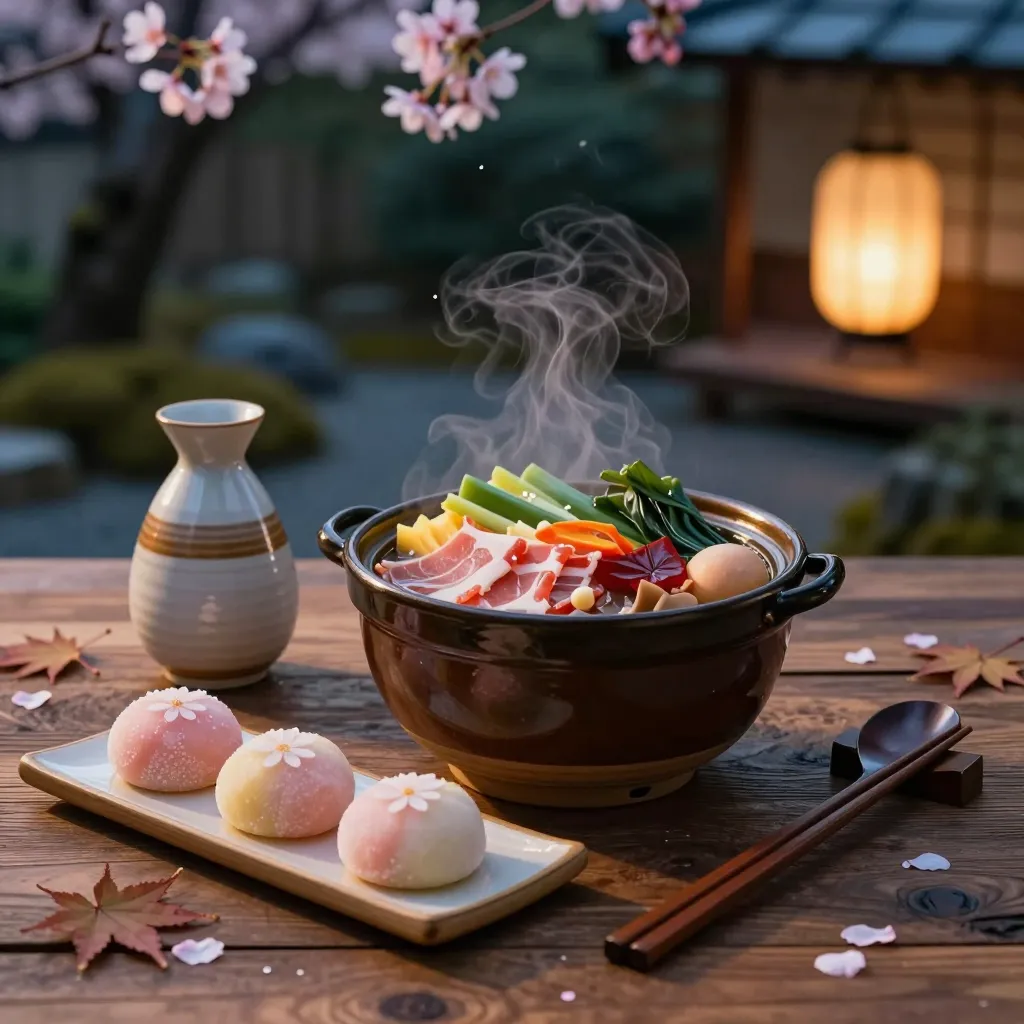
- Sakura Sweets: From pink-hued mochi to tea infused with pickled cherry blossoms, the floral aroma permeates seasonal confectionery.
- Spring Seafood: Look for Tai (sea bream), often served as sashimi to celebrate the new season.
Summer: Refreshment and Cooling Traditions
Japanese summers can be intensely humid, leading to a culinary focus on cooling foods and ingredients that stimulate the appetite. This is the season of crisp textures and bright, acidic profiles.
- Key Ingredients: Unagi (eel), cucumbers, eggplant, and various types of noodles.
- Must-Try Delicacies:
- Somen and Nagashi Somen: Very thin wheat noodles served chilled in ice-cold dashi. Nagashi somen involves sliding noodles down a bamboo flume of flowing water, adding an interactive element to the meal.
- Unagi no Kabayaki: Grilled eel glazed with a sweet soy sauce. Traditionally eaten in mid-summer to boost stamina against the heat.
- Cold Soba and Udon: Buckwheat or thick wheat noodles served with dipping sauces, often accompanied by grated daikon or wasabi to provide a refreshing kick.
Autumn: The Season of Harvest and Earthy Aromas
Autumn is widely considered the most flavorful season in Japan. As temperatures drop, the diet moves toward rich, earthy, and hearty preparations that utilize the abundance of the harvest.
- Key Ingredients: Matsutake mushrooms, chestnuts (kuri), sweet potatoes (satsumaimo), and Sanma (Pacific saury).
- Must-Try Delicacies:
- Matsutake Cuisine: Highly prized for their intense aroma, these mushrooms are often served in clear soups (suimono) or steamed with rice.
- Sanma: This fatty seasonal fish is a staple of autumn, typically grilled whole with salt to highlight its natural oils.
- Kuri Gohan: Chestnuts simmered with rice, providing a sweet and nutty autumnal comfort food.
Winter: Warmth, Umami, and Deep Flavors
When winter arrives, Japanese dining centers on heat and communal eating. This is the time for slow-cooked stews and dishes designed to be shared around a central heat source.
- Key Ingredients: Fugu (pufferfish), citrus fruits like Yuzu and Sudachi, and root vegetables.
- Must-Try Delicacies:
- Nabe (Hot Pot): Various styles of communal hot pot, such as Yose-nabe (mixed seafood and meat) or Chanko-nabe, are central to winter social dining.
- Oden: A comforting winter staple consisting of various ingredients (daikon, boiled eggs, konnyaku, and fishcakes) simmered in a light, soy-flavored dashi broth.
- Winter Citrus: Yuzu is frequently used to garnish soups and sauces, providing a bright acidity that cuts through the richness of winter fats.
Practical Tips for Seasonal Dining
- Watch the Menus: Look for kanji characters indicating the season. Even if you cannot read Japanese, menus in tourist-friendly areas often highlight "Seasonal Specials" (Kisetsu no menyū).
- Visit Depachika: For a high-quality overview of seasonal offerings, visit the basement food halls (depachika) of major department stores. These are curated showcases of the best seasonal fruits, bento boxes, and sweets.
- Follow the Local Calendar: Many traditional festivals (matsuri) feature specific foods that are only available during those few days, offering a unique way to experience local food culture.