A Culinary Journey Through Osaka: Essential Guide to Japan's Kitchen
Explore the vibrant flavors of Osaka, from the bustling stalls of Dotonbori to the deep-fried delights of Shinsekai. This guide covers iconic soul foods like Takoyaki and Okonomiyaki, offering travelers an authentic taste of Japan's culinary heart and essential local dining etiquette.
A Culinary Journey Through Osaka: The Kitchen of Japan
Osaka, traditionally known as Tenka no Daidokoro—the nation’s kitchen—offers a sensory overload for travelers. Unlike the refined, ritualistic precision of Kyoto or the sprawling neon expanse of Tokyo, Osaka’s food culture is defined by kuidaore: the philosophy of eating until you drop. In this city, the street is the kitchen, and flavor is the only currency that matters.
The Soul of Dotonbori
The Dotonbori district is the epicenter of Osaka’s gastronomic identity. Beneath the glow of iconic billboards and mechanical signage, narrow alleys reveal the foundations of local soul food.
Takoyaki: The Street Food Staple
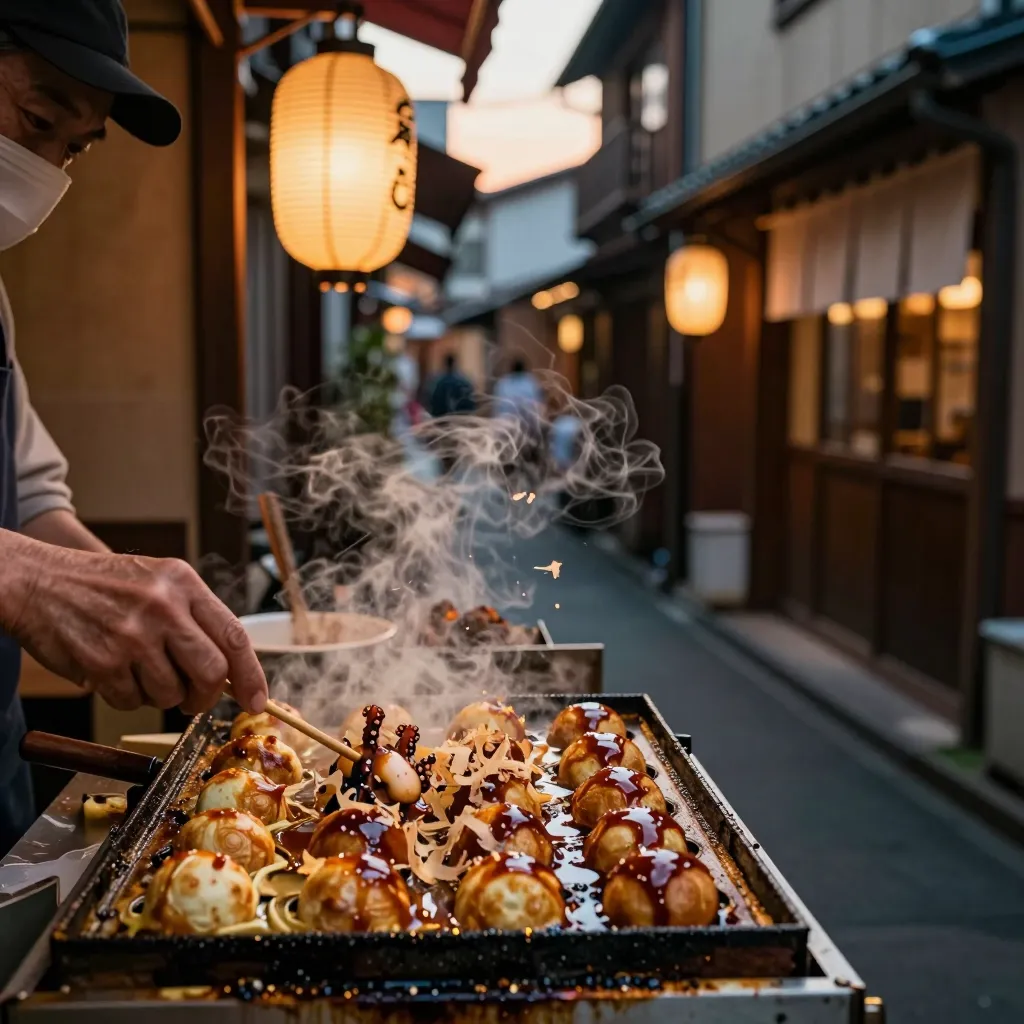
While takoyaki (battered octopus balls) can be found across Japan, Osaka elevated the dish into a craft. The perfect takoyaki has a thin, crisp exterior that gives way to a creamy, steaming interior. Watching masters prepare these at open-air stalls is part of the experience; they use rhythmic, lightning-fast motions with steel picks to rotate the batter spheres until they are golden-brown. Look for stalls that use fresh tako (octopus) and garnish with a generous smear of savory sauce, mayonnaise, and a dusting of aonori (dried seaweed) and katsuobushi (bonito flakes).
Okonomiyaki: The Savory Pancake
Often described as a Japanese savory pancake, okonomiyaki is an interactive meal. The name loosely translates to "what you like, cooked," and it lives up to the promise. Batter, shredded cabbage, and a variety of proteins like pork belly, shrimp, or squid are mixed and griddled on a flat hot plate. The Osaka-style involves mixing all ingredients together, while the Hiroshima-style—also widely available—layers the ingredients with yakisoba noodles. A thick, sweet-and-savory brown sauce, drizzled patterns of mayonnaise, and pickled ginger are essential components to balance the richness of the griddled batter.
Kushikatsu: The Art of the Skewer
In the Shinsekai district, kushikatsu reigns supreme. These are skewers of meat, vegetables, and seafood, lightly breaded in panko and deep-fried to golden perfection. The culture here is communal and historic, often anchored by a shared container of dipping sauce. A core piece of Osaka dining etiquette—a strict rule in established spots—is the "no double dipping" policy. Because the sauce is shared, you dip your skewer once before taking your first bite, ensuring the communal pot remains pristine for the next patron.
Beyond the Fried: Subtler Flavors
While Osaka is famous for its hearty, fried delights, the city also hides quieter culinary treasures.
- Kitsune Udon: This simple, comfort-focused dish features thick, chewy wheat noodles served in a dashi-based broth, topped with a piece of sweet, deep-fried tofu. The name kitsune (fox) comes from folklore, which suggests that foxes are fond of fried tofu.
- Hakozushi: Taking advantage of its historical proximity to the sea, Osaka developed a unique style of pressed sushi. Unlike hand-formed nigiri, hakozushi is shaped in small wooden boxes, creating rectangular, beautifully arranged bite-sized pieces that reflect an aesthetic of precision and history.
Navigating the Local Dining Landscape
To truly experience Osaka like a local, seek out the tachinomiya—standing-only bars tucked into the corners of neighborhood markets. These spots focus on high-quality ingredients, seasonal sake, and small plates, prioritizing atmosphere and conversation over formality.
When visiting, remember that while credit cards are increasingly accepted, smaller street food vendors and historic shops often operate on a cash-only basis. Embrace the hum of the crowd, the scent of sizzling iron plates, and the bustling energy of the alleyways; in Osaka, the best memories are almost always made at a counter with a skewer in hand.