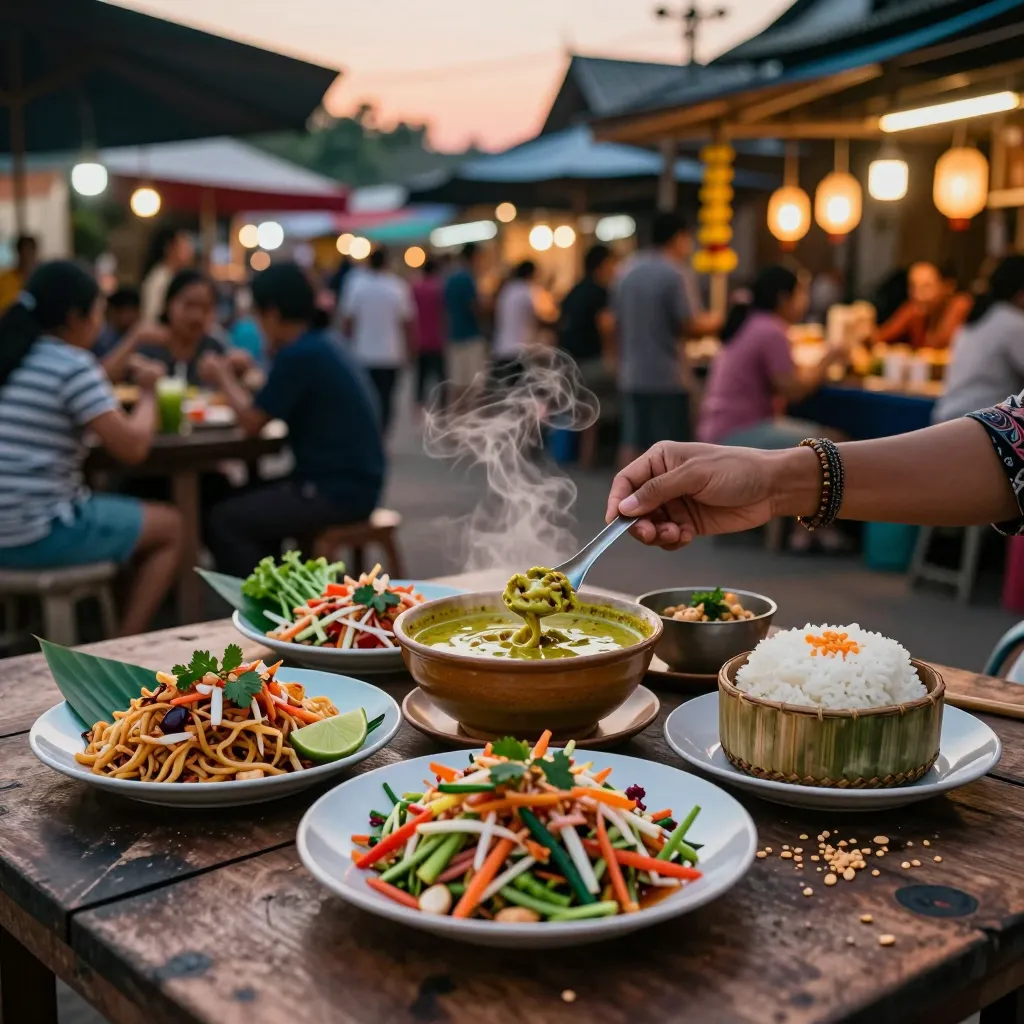
The Ultimate Guide to Thai Cuisine, Regional Dishes & Food Culture
Thai food is a masterclass in balance — sweet, sour, salty, spicy, and bitter in every bite. From Bangkok's coconut curries to Isan's fiery salads, each region tells a different story. This guide prepares you to eat like a local in Thailand.
The Ultimate Thai Food Guide: Navigating Cuisine, Culture, and Flavors
Thai food is far more than just a special occasion meal; in Thailand, it is the rhythmic heartbeat of everyday life. For most locals, dining out is a practical necessity—often faster and more affordable than cooking in a limited home kitchen. From bustling street stalls to quiet neighborhood shophouses, food is woven into the natural flow of the day.
While international versions of Thai dishes are often simplified, the food you will find in Thailand is a nuanced tapestry of fresh ingredients, regional traditions, and a sophisticated balance of flavors.
Core Principles: Balance and Freshness
At its heart, Thai cuisine is defined by balance. A dish is rarely about a single dominant note; instead, it is a calculated interplay of five core tastes:
* Sweet
* Sour
* Salty
* Spicy
* Bitter
A successful dish feels rounded and lively rather than one-dimensionally hot or sugary. This balance is also deeply personal—Thai meals are meant to be adjusted at the table using provided condiments to suit your specific palate.
Freshness is equally paramount. Aromatics, citrus, and herbs are often added at the very last second to ensure their brightness remains intact.
The Four Pillars of Regional Cuisine
Thailand is not a monolith of flavor; its food varies dramatically across four distinct regions, each shaped by geography and history.
Central Thailand: The Balanced Standard
This region, including Bangkok, provides the template for what most travelers recognize as "classic" Thai food. Flavors here are meticulously moderated—never too extreme in any one direction. Coconut milk is a staple in these curries, providing a rich, creamy counterpoint to the spice.
Northern Thailand: Herbal and Earthy
Influenced by Myanmar and Southern China, Northern food is typically milder and emphasizes herbs over sharp acidity. Here, sticky rice is the primary staple, used as a utensil to scoop up earthy curries that often lack coconut milk.
Northeastern Thailand (Isan): Bold and Fiery
Isan cuisine is famous for its intense, uncompromising flavors—spicy, sour, and salty, often underpinned by fermented ingredients. Grilled meats and vibrant salads paired with sticky rice are the hallmarks of this region.
Southern Thailand: Sharp and Seafood-Driven
Southern food is arguably the spiciest in the country. With an abundance of seafood and heavy influences from Muslim and Malay traditions, the dishes utilize turmeric and intense chili pastes that can be overwhelming even for locals from other regions.
Essential Cooking Techniques
Thai chefs rely on a few consistent methods to create their diverse menus:
* Stir-frying: Quick cooking over high heat in a wok to preserve texture.
* Grilling: Used extensively for meats and seafood, often served with a side of dipping sauce.
Pounding: Using a mortar and pestle to release essential oils from aromatics. This creates the intentionally uneven, vibrant texture found in authentic pastes and salads.
Steaming: A method used for fish and delicate desserts to keep flavors clean.
The Foundation: Rice
In Thailand, rice is the center of the meal, not a side dish.
* Jasmine Rice: Soft and fragrant, it is the standard companion for shared dishes in Central and Southern regions.
* Sticky Rice: Common in the North and Northeast, it is eaten with the fingers and pairs perfectly with grilled items.
Dishes are designed to be eaten with rice, which acts as a buffer for salt, spice, and richness.
Navigating the Street Food Culture
Street food is a highly specialized craft. Many vendors focus on perfecting just one or two dishes, ensuring consistent quality and speed. It is a practical, affordable way to eat like a local, with vendors appearing at different times of day to meet the neighborhood's needs.
Dietary Needs and Spice Levels
Understanding local terminology is key to a good experience:
* Spice Levels: Asking for "not spicy" often results in a dish that is less spicy, but rarely chili-free, as many bases are inherently hot.
* Vegetarian vs. Jay: Standard vegetarian food may still contain fish sauce or shrimp paste. For strict vegan options, look for the "Jay" symbol—a yellow sign with red characters—which indicates food prepared without animal products or pungent aromatics.