Staying in a Kyoto Machiya: Your Complete Guide to Traditional Townhouses
Experience authentic Kyoto by staying in a machiya, the city's traditional wooden townhouses that have sheltered merchants and artisans for generations. These architectural gems offer travelers immersive cultural stays with private courtyard gardens, tatami rooms, and living history—far beyond typical hotel experiences. Perfect for those seeking genuine Japanese hospitality and timeless atmosphere.
Staying in a Kyoto Machiya: Your Guide to Traditional Townhouse Stays
There's a particular magic to waking up in Kyoto's historic districts—not in a standard hotel room, but within walls that have sheltered generations of craftsmen, merchants, and tea house proprietors. The machiya, Kyoto's distinctive wooden townhouses, offer travelers something increasingly rare: an immersive stay in living history.
What Exactly Is a Machiya?
Machiya emerged as the dominant architectural form for Kyoto's merchant class from the Edo period through the early 20th century. These narrow, deep structures maximized limited street frontage while extending far back from the road—often 20 meters or more. The design wasn't merely practical; it reflected social hierarchies that placed merchants below samurai in status but allowed them to display wealth through interior craftsmanship rather than outward grandeur.
Unlike Tokyo and Osaka, which suffered devastating bombing during World War II, Kyoto emerged physically intact. This preservation means thousands of genuine machiya survive, many dating to the Meiji and Taisho eras. While some remain family residences, economic pressures and changing lifestyles have led many owners to repurpose these spaces as restaurants, galleries, and increasingly, vacation rentals.
The Architecture of Daily Life
Step through the wooden frontage of a machiya and you enter a world governed by different principles than Western housing. The structure unfolds in layers, progressing from the public "mise no ma" (shop space) near the entrance through increasingly private living quarters toward the rear.
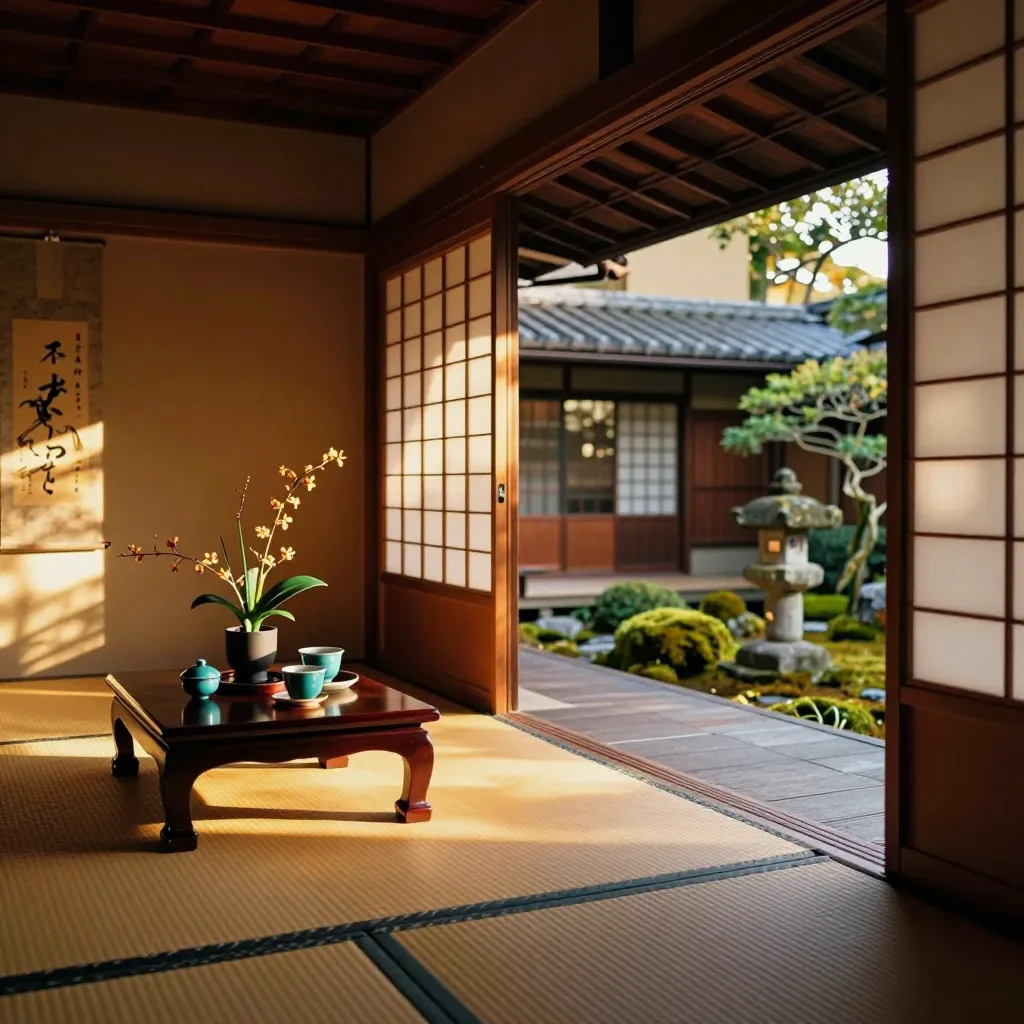
The tsubo-niwa—the enclosed courtyard garden—sits at the heart of every machiya. Open to sky but sheltered from street view, these pocket gardens bring nature into the deepest parts of the house. Rain falling on moss, maple leaves scraping against stone lanterns, the play of light through shoji screens: these sensory experiences define the machiya stay. Many measure just 3-4 meters square, yet master gardeners have refined their composition over centuries to create complete landscapes in miniature.
Materials throughout are organic and breathable: hinoki cypress and pine framing, tatami straw matting, clay walls, and paper screens. This natural construction responds to Kyoto's humid summers and dry winters, creating remarkably comfortable microclimates without mechanical intervention.
The Modern Machiya Experience
Contemporary machiya rentals occupy a fascinating middle ground. The best properties preserve historic fabric—exposed beams, original tokonoma alcoves, traditional kitchens with irori hearths—while introducing necessary modernizations. Western beds typically replace futon bedding (though many offer both options), and bathrooms have been updated with proper plumbing and soaking tubs.
What distinguishes machiya from standard vacation rentals is the curation. Operators of quality properties understand they're offering cultural immersion, not just accommodation. Many provide detailed house manuals explaining how to operate the old wooden shutters, the proper way to enjoy the garden, or seasonal customs to observe. Some arrange for local chefs to prepare kaiseki meals in-house, or connect guests with neighborhood artisans.
Where to Stay: Kyoto's Machiya Districts
Southern Higashiyama offers the classic Kyoto atmosphere most visitors envision. This preserved historic district, stretching from Kiyomizu-dera temple toward the Kamo River, contains numerous machiya converted to rentals. The trade-off is tourist density—this is Kyoto's most visited area, and serenity can be elusive during daylight hours. Evenings, however, transform the lantern-lit streets into something genuinely atmospheric.
Gion and its periphery provide access to Kyoto's geiko (geisha) district. Machiya here often served as ochaya—teahouses where geiko and their apprentices entertain guests. These properties typically feature larger reception spaces and more elaborate garden courtyards than standard merchant houses. The neighborhood quiets remarkably after the evening's last taxi departs, leaving residents alone with the wooden facades.
Northern Higashiyama, toward the base of the Higashiyama mountains, offers a more residential experience. The Philosopher's Path and its surrounding lanes feel removed from central Kyoto's bustle while remaining accessible. Machiya here often feature superior garden spaces, as larger plots were available when these suburbs developed in the late 19th century.
Central Kyoto—the grid of streets between the Imperial Palace and the Kamo River—contains machiya in various states of preservation. Properties here suit travelers prioritizing convenience over atmosphere, with easy walking access to downtown dining and shopping.
Practical Considerations
Machiya stays require some adjustment. These are wooden structures, often over a century old, with corresponding quirks. Staircases are steep and narrow. Floor levels change between rooms. Sound travels differently through paper walls than through concrete.
Most machiya rentals operate as entire-house bookings, making them economical for families or friend groups rather than solo travelers. Minimum stays typically range from two to five nights. Kitchen facilities vary widely—some properties offer fully equipped spaces for self-catering, others provide only basic amenities for breakfast preparation.
Seasonal timing matters. Kyoto's humid summer (July–August) can challenge machiya without robust air conditioning. Winter heating, traditionally provided by charcoal braziers, has been modernized in rental properties, but these remain drafty structures by contemporary standards. Spring and autumn offer ideal conditions, though booking competition intensifies during cherry blossom and fall foliage peaks.
Beyond Accommodation
The machiya stay represents a particular philosophy of travel: slowing down, inhabiting rather than visiting, accepting the friction of unfamiliar systems. Morning coffee overlooking a garden where someone pruned pines three generations ago carries weight that hotel breakfast buffets cannot replicate.
For travelers to Japan seeking authenticity without sacrificing comfort, the machiya offers a middle path—neightly rigorous ryokan experience nor anonymous international hotel, but something distinctly Kyoto: a merchant's house opened to temporary residents, continuing its centuries-old function of sheltering those passing through.