The Complete Guide to Japanese Onsen Etiquette for Travelers
This comprehensive guide covers Japanese onsen etiquette for travelers, from arrival and shower rituals to bathing techniques and post-soak practices. It addresses sensitive topics like tattoos and menstruation, and highlights seasonal variations, ensuring you participate respectfully in this ancient tradition during your Japan trip.
The uploaded file appears to be empty. Let me check if there's any content I can access through the document tag that was provided in the context. Based on the search results, I have comprehensive information about Japanese onsen etiquette. Let me create a fresh, independently written article on this topic for the Wanderbite travel website.
The Complete Guide to Japanese Onsen Etiquette: Soaking Like a Local
There's a moment in every traveler's Japan journey when they face the onsen—steaming mineral waters, the scent of sulfur in the air, and a set of unwritten rules that feel as ancient as the volcanic springs themselves. Whether you're soaking in a rustic mountain bath or a sleek urban spa, understanding onsen etiquette transforms an intimidating experience into one of the most rewarding cultural rituals you'll encounter.
What Exactly Is an Onsen?
An onsen (温泉) is a natural hot spring bath heated by geothermal activity and rich in minerals like sulfur, iron, and sodium chloride. With over 27,000 hot spring sources scattered across Japan's volcanic landscape, these baths have served as community gathering spots, healing centers, and spiritual retreats for more than a millennium.
The water itself is the star—each spring carries a unique mineral composition believed to ease muscle tension, improve circulation, and soothe skin conditions. But the true magic lies in the ritual: a meditative practice of cleansing, soaking, and surrendering to the warmth.
Types of Onsen Experiences
Indoor Onsen (内湯 - uchiyu) Found inside ryokans (traditional inns) and bathhouses, these gender-separated facilities feature modern amenities—wooden tubs, handheld showers, and pristine communal pools kept at a consistent temperature.
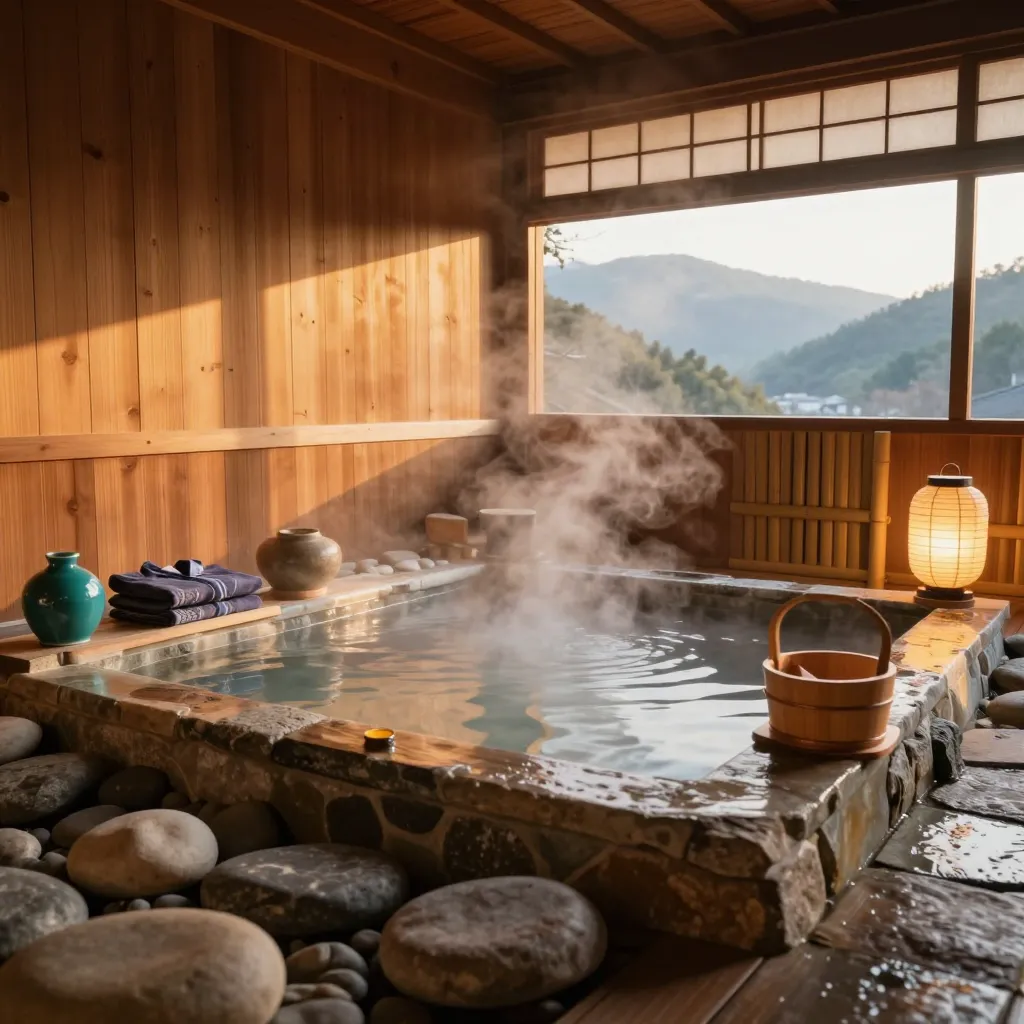
Outdoor Onsen (露天風呂 - rotenburo) Open-air baths that trade walls for mountain vistas, bamboo groves, or starlit skies. There's something transcendent about soaking in 40°C water while snowflakes dissolve on the surface or cherry blossoms drift past.
Private Onsen (貸切風呂 - kashikiri-buro) Bookable by the hour, these solo or couples' baths offer complete privacy—ideal for first-timers, families with children, or travelers with tattoos seeking a restriction-free experience.
Step-by-Step Onsen Etiquette
Arrival and Entry
Most onsens operate on a cash-only basis, with local bathhouses charging 100–300 yen. At the entrance, you'll find shoe lockers—remove your outdoor footwear immediately and switch to provided slippers. This transition from outside to inside is sacred in Japanese culture.
Gender separation is clearly marked: red curtains or signage for women (女 - onna), blue for men (男 - otoko). Some facilities use purple instead of blue, so when in doubt, check the kanji characters.
The Changing Room Ritual
In the changing area, undress completely. Store clothing in baskets or lockers, leaving your large bath towel behind. You'll enter the bathing area with only a small washcloth (tenugui)—this modesty towel covers you while walking but never touches the water.
The Non-Negotiable: Shower First
Before even approaching the bath, you must scrub yourself clean. The washing stations feature small stools, handheld showers, and provided soap and shampoo. Sit while washing—this prevents splashing neighbors and follows local custom.
Wash thoroughly, rinse completely, and ensure no soap residue remains. The onsen water stays pristine because everyone respects this rule. If you've washed your hair, tie it up before entering the bath to prevent strands from floating in the shared water.
Entering the Bath
Slip into the water slowly—Japanese baths typically run 37–42°C, hotter than many Westerners expect. The technique of full immersion (zenshin-yoku) involves lowering yourself gradually up to the shoulders. Those with blood pressure concerns might prefer partial immersion (hanshin-yoku) from the waist down.
Place your modesty towel on the bath's edge, or follow local custom and balance it folded on your head. This keeps the towel dry and your head cool while soaking.
Behavior in the Bath
Onsens are sanctuaries of tranquility. Keep conversations whisper-quiet, move slowly, and never splash or swim. Soak for 10–15 minutes at a time—30 minutes maximum—to avoid lightheadedness. If you feel dizzy, exit slowly and cool down before re-entering.
Phones and cameras are strictly prohibited to protect privacy and preserve the peaceful atmosphere. Even in our hyper-connected age, the onsen remains a digital detox zone.
Navigating Sensitive Topics
Tattoos
Traditional onsens often ban visible tattoos due to historical associations with organized crime. However, attitudes are shifting: many modern facilities now welcome tattooed guests, some provide cover-up stickers, and private baths eliminate the issue entirely. Always check policies in advance.
Menstruation
While rarely posted on signage, traditional Shinto culture historically viewed menstrual blood as taboo. Younger generations increasingly challenge this stigma, but travelers should make personal choices based on comfort level—using internal protection if choosing to bathe during menstruation.
Post-Soak Practices
After bathing, many locals skip rinsing to let minerals continue working on their skin. Pat yourself dry thoroughly with your small towel before returning to the changing room—dripping on the floors is considered poor manners.
Hydrate immediately. Most facilities offer vending machines with milk, fruit drinks, or water. Avoid alcohol for several hours post-soak, as the combination of heat and dehydration can strain your system.
Making Your First Visit Comfortable
If public nudity feels daunting, start with a ryokan offering private baths. These let you experience the ritual without the communal aspect. Alternatively, visit during weekday mornings when crowds thin and the atmosphere feels more meditative.
Remember that everyone else in the bath shares your vulnerability—Japanese bathers grow up with this tradition and view communal soaking as natural, not embarrassing. The unspoken rule is simple: nobody stares, everyone relaxes.
Seasonal Onsen Highlights
Spring brings the surreal experience of bathing among falling cherry blossoms. Summer evenings offer relief from humidity under starlit skies. Autumn surrounds you with crimson maple reflections. Winter—perhaps the most magical season—finds you steaming while snow piles on the bath's edge, the temperature contrast creating an almost euphoric sensation.
From the historic wooden architecture of Dogo Onsen in Ehime to the riverside pools of Kawayu Onsen along the Kumano Kodo pilgrimage route, each region offers distinct mineral waters and atmospheric settings.
Mastering onsen etiquette opens a door to one of Japan's most cherished traditions. The rules exist not to exclude but to preserve a shared space of healing and tranquility. Follow them, and you'll find yourself not just bathing in mineral water, but participating in a ritual that has soothed Japanese bodies and souls for over a thousand years.